Thursday, April 12, 2012

theatre review LEAP OF FAITH, Broadway, April 5

The new Broadway musical Leap of Faith is yet another musical based on a movie.  This time the film is the 1992 movie that starred Steve Martin as a con man posing as a preacher who travels with his flock from small town to small town bilking the locals out of their money and skipping town as quickly as he can.  For Broadway, Raul Esparza is playing Jonas Nightingale, the Martin role and Jessica Phillips is the female lead.  We caught an early preview of the show last week. 

The plot is fairly straight forward and nothing that you haven't seen before, as well as one where you can easily predict the outcome.  Once Jonas' bus breaks down in Sweetwater, Kansas, a small rain starved town, he is forced to stay there until the replacement bus part can arrive and he falls for the local widowed female sheriff who has a crippled son.  Can the sheriff change Jonas into an honest man?  Will the boy walk again?  Will the small town ever see rain?  If you answered "no" to any of these questions you've most likely been living under a rock.

Raul Esparza in the L.A. production of the show
Told as a flashback story framed by a revival meeting that Jonas is giving at the actual Broadway theatre the musical is playing at, the framing device doesn't exactly always work and is basically tossed to the side by act two. The beginning and end are also somewhat glossed over with loud choral music sung by the energetic ensemble that gets in the way of having a clear introduction into the flashback part of the story as well as exactly what Jonas did after he left that Sweetwater and ended up at the St. James theatre on Broadway.  The musical did have an out of town tryout in L.A. in 2010 with Esparza and some of the same cast.  I'm not sure if there were other issues with the show that were fixed before it started previews on Broadway, but hopefully the current issues can be resolved before the musical officially opens on April 26th.

Phillips and Esparza in a promo shot
for the show
Raul Esparza is giving yet another of his energetic performances.  It is just too bad that not all of the songs he is given to sing are easy to deliver, with some of the songs having lyrics that are jammed into the score, sometimes setting them up strangely against the music.  Esparza is a very talented singer so hopefully the score issues will be addressed as well.   Phillips is perfect as the town sheriff and protector who is not only watching out for her son but the entire town while at the same time falling for a man even when she knows he is out to do the town wrong.  It is a somewhat difficult part to play but Phillips succeeds.  She has a nice country twang to her delivery and reminded me a lot of Dee Hoty from her Will Rogers Follies and Best Little Whorehouse Goes Public days.

The cast also includes Kendra Kassebaum as Jonas' sister and Kecia Lewis-Evans as the leader of the choir.  Both are fully developed characters, with plenty of moments to add to the plot as well as several moments to show off their signing chops,  Lewis-Evans in particular blows the roof off the theatre at several times in the show.  Also feature is Leslie Odom, Jr. as Lewis-Evan's son as the young man who left the group and came back as a legitimate preacher.  He is a good catalyst for some of the action.  Odom, Jr. is currently co starring on the tv show Smash and it is nice to see him live in a real Broadway show.  Talon Ackerman as Phillip's teenage son is giving a great performance, polished, real and sincere and I am looking forward to seeing a hopefully long career from him in the future.

Kecia Lewis-Evans and Leslie Odom, Jr in the L.A.
production of the show
Composer Alan Menken now has three shows running on Broadway, Newsies, Sister  Act and Leap of Faith  It is just too bad that the score for Leap of Faith is the least polished of the three.  Also, the choral numbers for Sister Act are much better and memorable then the ones in Leap.  Now the character songs are pretty good, including a great one in act two for all of the leads, called "Are You On The Bus?," two good duets for Esparza and Phillips, one in each act, "I Can Read You" and "Long Past Dreamin'" and a great song for Lewis-Evans called "Lost."  Unfortunately Raul's big act two solo called "Jonas' Soliloquy" could be a little better.  Lyricist Glenn Slater has some good lyric rhymes but could work on some of Jonas' songs to make the lyrics fit the music better.

The set design by Robin Wagner includes a revival tent that is built before our eyes as well as a few set pieces that slide on and off.  The set also features ramps and stairs that go out into the audience as well as up into the mezzanine.  But the revival tent set piece is the focus here and moves in various positions throughout the show.  Costumes by William Ivey Long are fine and include a mirrored suit jacket for Jonas to wear at one point.

The show is one of those shows where act two is actually better than act one.  It might be because a lot of what happens in act one is repetitive since we already know at the beginning just who Jonas is so we don't need to keep being told that over and over again.  In the second act we see the changes all of the characters make as well as really have a more emotional connection to the material.  There are also a couple of really nice theatrical moments toward the end of the show that continue on into the curtain call.  So while I was somewhat moved by the last 15 minutes of the show a lot of what came before that was muddy, unfocused with some musical moments that were bland or repetitive.   Hopefully director Christopher Ashley can firm up the issues with the show before it opens in two weeks as there is a good show within the preview performance we saw that with the right bit of editing and work can easily shine through.

But no matter the issue I had with the material, it is Esparza's show, and his energy in the role as well as his interactions with Phillips and the other lead actors, especially with young Ackerman, is excellent and I think he will easily see his fifth Tony nomination for this role if not finally winning a well deserved Tony for this performance.  While on one hand I kinda see this show as equivalent to last years Catch Me If You Can, and like that show it might walk away with a lead Tony win, nothing else and be closed by Labor Day.  But while I liked Catch Me better than Leap of Faith, there is a somewhat more emotional connection to this show and the audience around me was having a great time, so this show might just catch on and have a healthy run.

Official Show Site

Broadway.com compilation of behind the scenes interviews and rehearsal performance footage:


Wednesday, April 11, 2012

cd review ROBERT CREIGHTON, Ain't We Got Fun

Wow!  The new cd from Robert Creighton might just be the best debut recording from a Broadway performer in years.  And why I say that is not only due to Creighton's impressive vocal abilities, the song selections and the Broadway guest stars he has included but also because Creighton completely avoids all of the fall backs Broadway performers seem to lean on when releasing a debut recording.  There are no songs from Sondheim or Lloyd Webber, no story songs from some hip or up and coming composer and except for two original songs, the most recent selection was written in 1944.  This is definitely not your usual Broadway debut solo cd.

Now while Creighton isn't exactly a household or even an A list Broadway name, like his costars in his recent Broadway show Anything Goes Joel Grey and Sutton Foster, he has appeared in numerous Broadway shows including Chicago, The Little Mermaid,  Chitty Chitty Bang Bang and The Lion King.  The two original songs on this cd are from a new musical about Jimmy Cagney that Creighton co-created, starred in and wrote the songs for, simply called Cagney!, but more on those songs later.

The cd starts off with a "Dad's Medley" that gives us the brief back story of Creighton and how as a young boy he would perform for his family.  A bouncy "Ain't We Got Fun" is next followed by one of the impressive new songs from Cagney!, "Crazy 'Bout You" that features some talented guitar playing by Eric B. Davis.  It fits perfectly within the other, older standards on the cd, which is a high compliment.  One of my favorite tracks on the recording is "My Buddy" that includes a lovely guitar arrangement that not only gives Davis another chance to shine but also is highlighted by the way Creighton's phrasing and his voice drives home the meaning of the lyrics in a simple, understated way.

The first of Creighton's guest stars is Tituss Burgess who starts off "Accentuate the Positive" with his usual flair.  Creighton joins in by adding a lovely counterpoint with "Look for the Silver Lining" that pairs perfectly with Burgess with both men hitting some impressive notes at the end.  A fun barbershop quarter arrangement of "I Want a Girl (Just Like The Girl That Married Dear Old Dad) with Daniel J. Edwards, John Treacy Egan, Merwin Foard and Brent-Alan Huffman includes some great harmonies backing Creighton up and has a really great finish. 

Now, back to those two original songs from Creighton and Cagney!:  The next track is my favorite song on the cd, called "Fallin' In Love With You."  It is a lovely duet with great lyrics, perfect musical phrasing and is supported by a lovely arrangement.  Creighton is joined by Kate Baldwin on this track and the two of them are definitely having a fun time together.  Cagney! had its world premiere in Florida three years ago and based on the two songs from the show on this cd I hope Creighton is able to get a production in New York happening soon.

"If You Were The Only Girl in the World" is my second favorite track on the recording.  It has a great arrangement and Creighton's vocals on this track are so impressive with his perfect delivery of the simple meaning behind the lyrics.  Heidi Blickenstaff joins in for a lively "You Are My Sunshine" that is followed by a touching and very emotional take on "I'll Be Seeing You" that features some impressive flugelhorn playing by Joe Burgstaller.

An impressive arrangement of "Wrap Your Troubles in Dreams" perfectly compliments Creighton's vocals.  I love how Creighton's whistling at the end of the song is mirrored by the instruments. Next up are two tracks closely associated with James Cagney when he portrayed George M. Cohan in the movie Yankee Doodle Dandy.  "Give My Regards to Broadway" features a lovely duet with Joel Grey and the joy the two men are having signing together comes through on the recording.  Creighton actually understudies for Grey in Anything Goes.  An upbeat "Yankee Doodle Dandy" follows including a lovely tap solo in the middle.

The final track on the cd is a lovely version of "I'm Always Chasing Rainbows" with no vocal but instead a touching trumpet solo.  While this might seem a little odd if you don't have the liner notes handy, but when checking them you will see that it is Creighton himself imitating a trumpet solo with his lips - and what a lovely solo it is.  The man seems like he can do just about anything.

The cd was produced by Georgia Stitt who also provided many of the arrangements as well as most of the piano accompaniment.   This is an impressive effort by Stitt.

I'm looking forward to hopefully seeing Cagney! and seeing and hearing more of Creighton in the future.


Wednesday, April 4, 2012

theatre review CARRIE, Off Broadway, April 3

We journeyed back to see Carrie, the Musical again last night and enjoyed it just as much the second time as the first.  Here is my review of our initial trip to see this show. 

As could be expected the show has gotten even tighter then it was when we saw it back in previews, the cast has gelled more as well as the performances are even more honed now then before.  Molly Ranson and Marin Mazzie are still hitting it out of the park in their portrayal of Carrie and her crazy, religious mother Margaret.  And I did appreciate the supporting cast more this time.  Not sure if initially I was so focused on what had been changed from the original 1988 Broadway flop version of this show that I didn't focus much on the supporting cast or if they've had some time to grow into the roles now.  (My blog post about the history of the show can be found here.)

The four main supporting "student" parts are basically portrayals of good and evil with Christy Altomare and Derek Klena being the "good" couple and Jeanna de Waal and Ben Thompson the "bad" ones.  All four are delivering on what is expected of them, even if they are somewhat stereotypical parts.  We did have two understudies last night, Anne Tolpegin was on for the gym teacher Mrs. Gardner and I actually liked her take on that role better than Carmen Cusack's and Jake Boyd was on for one of the high school boys.

We were seated further back then back in February when we were in the first row and it allowed the opportunity to get a better idea as to the overall staging and set design as well as the direction from Stafford Arima.  One scene in particular, Margaret's solo "When There's No One," is highly effective from further back as during the song, the entire theatre slowly fades to black with only a single spotlight on Mazzie's face as she is surrounded by dozens of candle's scattered around the entire stage.  It is chilling, eerie and perfectly in sync with the lyrics of the song.

Not much more for me to say than what I said in my original review.  Just too bad this production won't have an extended life.  I'm still praying they make a cast recording, but since the show closes on Sunday it looks like the chance of that happening are getting slimmer by the day.

theatre review TWELVE ANGRY MEN, George Street Playhouse, April 1

Twelve Angry Men is the ultimate ensemble dramatic play.  Every one of the twelve actors gets a moment to shine in it and the revival of the play at the George Sreet Playhouse has a excellent cast with several firecracker performances.  The play itself started as an hour long tv drama in 1954, was expanded for the 1957 Oscar nominated film and also reshaped as a 100 minute one act play.  The author of all three of these versions in Reginald Rose who was inspired to write this after he served as a juror on a manslaughter case.

The play is set in 1954, on a very hot day, and starts right when the jury enters the jury room to begin deliberations on a murder case.  The 12 jurors are all white men of various ages and the 16 year old boy who is on trial for murdering is father we quickly learn is most definitely not white.  They must reach a unanimous decision and when they take their first vote, just moments after they enter the room, they quickly learn that 11 of them believe the boy is guilty where as one believes he is innocent.  That one man has some question about the "beyond a reasonable doubt" part of the guilty verdict and he begins to bring up various pieces of evidence that were presented in the case to question as well as has serious issues around the lack of concern and attention to detail on the part of the boy's court appointed lawyer.  The play is a well written demonstration of various views of racism, aging, father/son rebellion and the impacts all of those have on the twelve men in the room.  It is also an interesting demonstration of the judicial system where one man is to be judged by a jury of his peers, which is especially concerning when the peers in front of you are nothing like you and come in with already preconceived judgements.  
John Bolger, Michael Sirow, Jonathan Hadary, David Schramm, Terry Layman,
Gregg Edelman and David Adkins.

Led by Gregg Edelman as the lone "not guilty" voting juror, who quietly and slowly works his concerns of the trial and thoughts on the rest of the jurors, he so simply but effectively portrays this man who is fighting for justice that we've all seen before.  He keeps his cool even when many of the men around him don't and provides the one constant glimmer of hope throughout the play.  David Schramm and James Rebhorn are the two most obstinate people in the room and the two loudest.  Schramm is the loud mouth bigot and Rebhorn is the juror who has plenty of issues with his son.  They are excellent in portraying the opposite side that Edelman is on.  Both men get themselves so worked up during the deliberations that you literally wouldn't be surprised if one of them has a heart attack, that is how accurate their portrayals are.  
James Rebhorn being held back at an explosive moment
in the play 

Jonathan Hadary and Terry Layman are the foreign juror and oldest juror respectively who both come to Edelman's understanding earlier then the rest and are ridiculed by the others for doing so.  Hadary in particular is so perfectly stated in his portrayal.  He is polished in his Eastern European accent and demeanor and appears so much more accepting of the responsibility and importance of being called to serve as a juror.  That role is quickly lost on a few of the other fellow jurors, Jonathan C. Kaplan in particular, who would rather get their juror sentence over as quickly as possible so they can get back to their lives.  Kaplan can't stop going on about the baseball tickets he has for that night and he is always rushing the others to make decisions.  (Kaplan was actually nominated for a Tony in 1993 as 13 year old Jason in the Tony winning musical Falsettos.  I saw him twice in that role and it is nice to see him all grown up and acting in a serious drama.)

Hadary, Rebhorn, Schramm, Layman, Sirow, Kaplan,
Sellars and Edelman
Scott Drummond and Michael Sirow are the two youngest jurors who let the older men have most of the say in the matters, but both are easily stirred to action when they find themselves caught in the crossfire of the other jurors as well as when issues that are directly related to their upbringing, Sirows in particular, are up for debate.  David Adkins is the wealthy businessman who tries to be calm and cool and is very reserved about the proceedings until he realizes that he starts to have his doubts as well about his initial guilty vote.  John Bolger, Jim Bracchitta and Lee Sellars round out the 12 jurors and they all get a moment or two to shine, add to the conversation as well as the decisions that the jurors make.  There isn't one bad actor on stage here.

Director and George Street Artistic Director David Saint can be commended once more for not only his superb, taught direction but for assembling a top notch catch.  The effective set design by R. Michael Miller perfectly grounds the action in the 1950's with a period perfect giant room. The pre-existing sweat stains alone on Schramm's shirt earn costume designer Esther Arroyo a huge award.  The rest of the costumes are designed perfectly to easily establish the various different classes and ages of the jurors. 

Twelve Angry Men only runs through this Sunday- don't miss it.

Official George Street Playhouse Site

Highlights from this production:


Tuesday, April 3, 2012

theatre review LOOK BACK IN ANGER, Off Broadway, March 31

The "angry young man" is a well known character in both plays and movies.  But that term wasn't known until the mid 1950's when John Osborne's play Look Bank in Anger burst upon the London stage.  Over the course of three acts, we meet and get to know Jimmy Porter and his three friends, and while they are pretty much all angry it is Jimmy who is the angry young man in question, and boy is he angry.   He is a working class man but one with an education, but he is angry at everything from his wife, his job, his friends, family, the mediocrity of his generation and the class system in general.  After years of posh upper crust English plays like The Importance of Being Earnest and Blithe Spirit one can hardly grasp the gasps that must have come from the audience when they saw the characters and language that was in front of them when Look Back in Anger first premiered.  Supposedly just the sight of an ironing board on the stage alone when the curtain went up dress gasps.  Imagine an ironing board on stage in either Earnest or Blithe Spirit!

Matthew Rhys and Sarah Goldberg
Jimmy is an intellectual bad boy and it is easy to see why both his wife and her friend fall for him, even though both ladies are from a much higher class on the class scale.  Even Cliff who rents the room next door is drawn to Jimmy.  Jimmy is a man fighting but with no cause or crusade.  It is as if Osborne is saying that this is what centuries of the class system in England have spit out.

Today the shock of the play is nothing compared to what it must have been like almost sixty years ago but this revival of the play is still shocking in its ability to cut to the raw nerve at the center of the piece.  It gets there by having one of the most minimal set designs in recent history as the entire stage is about six feet deep and consists of a black back wall, a mattress, a couple of dressers, a few chairs and an ironing board.  This minimalistic approach is effective in grounding us in the reality of how Jimmy and his wife Allison are living.  The stage is on a slightly higher platform than usual as if the four characters are on display for us and in such a small setting as if they are trapped with no where to go.  If this idea of being trapped and lost was what director Sam Gold was going for then he vastly succeeded.


Adam Driver, Sarah Goldberg and Matthew Rhys-
this is about 1/2 of the entire set!
 The cast is simply superb.  Led by Matthew Rhys, best known as Kevin from tv's Brothers and Sisters, he is so effective as Jimmy that he perfectly gets under the skin  of the character ringing every nuance out of Osborne's language.  His emotional range alone is amazing and the way he delivers the words, almost in the way a poet would, makes the other characters and the audience pay attention.  You can easily see how others would be drawn to him.  He is exciting and intense but you also see in his eyes the love that he has for the other characters.  He also plays a pretty good trumpet, even if he only knows a few notes.

Matthew Rhys and Charlotte Parry
The supporting cast is just as good,  Sarah Goldberg as Jimmy's wife Alison is quiet and reserved around Jimmy as if trying not to wake the sleeping, angry giant.  The way that Alison tears into a head of lettuce when she makes a salad more than exhibits in frustration as well as what her true feelings for life are.  Adam Driver as Cliff so perfectly exhibits the lost youth who clamors for anything to excite him and when that excitement comes in Jimmy and Alison you know there won't be much of a happy ending for him.  Charlotte Parry as Helena is excellent at playing two sides of a character, the upper crust one who looks down upon the life that Alison has made with Jimmy but then finds herself, in a very humorous moment in the second act, living exactly the same existence as Alison.

Look Back in Anger is an interesting play in that while it is about desperation and how characters are drawn to others while being used or using them it is also about lost youth and how society has forced some individuals to only achieve certain levels of success.  Seeing this show in a weekend when we saw the new play Clybourne Park and the classic drama Twelve Angry Men was very interesting as they all deal with the issue of race or class and how society treats people differently.  This production only runs through this Sunday, April 8th, don't miss your chance to see this excellent production.

Official Show Site

Highlights from this production:

Monday, April 2, 2012

theatre review CLYBOURNE PARK, Broadway, March 30

The new Broadway play Clybourne Park by Bruce Norris comes to Broadway with a pretty high pedigree.  It won the 2011 Pulitzer Prize for Drama and the 2011 Olivier Award for Best New Play.  I'm not certain if  it is because I went in with somewhat high expectations knowing the play had won those awards but I was basically underwhelmed by the play.

Set in a house in Chicago's Clybourne Park district, the play tells the story of two different sets of characters.  In act one, set in 1959, those characters include a middle aged white couple who experience a tragedy in their lives and are moving out of their house in just a few days.  Various members of their community come to visit them one day when they learn that the family the house has been sold to isn't white.  The concern as to what this will do to the rest of the area is the driving force to try to get the couple to change their minds about selling the house to this family.  However the husband doesn't want to listen to their concerns since they all pretty much turned their backs on him and his wife before and after they experienced the tragedy that had a huge impact on their lives.

In act two, set in 2009, we see the same house, now in disarray, and the young white urban couple who are in the final stages to begin demolishing the house after they recently purchased it. You see, because the neighborhood is so close to downtown, white families are looking to move back into the area, so even though the community is run down, it is suddenly hot again.  The couple are surrounded by members of the homeowners association and their lawyer as it seems their plans aren't exactly in line with the by laws of the association.  The concern is that their house will now be larger then those surrounding it and of a more modern architecture, thus providing concern as to what it will do to the neighborhood. 

Christina Kirk and Frank Wood
The play touches on many themes and ideas.  Everything from racism, sexism and racial integration to issues around class, housing, the gentrification of neighborhoods and how people feel about their neighbors is present.  And a key element is how the perceptions neighbors have when their fellow neighbor's children come back from fighting overseas might not be exactly correct and could eventually not only force a family to move out of the area but for their son to commit suicide.

While Clybourne Park is a well written and acted play, I guess the major issue I had with it is that it is supposed to be a take off or homage to the classic drama A Raisin in the Sun.  The house the play is set in is the same one that the family in A Raisin in the Sun is moving into, as the black family in that play is the family who bought the house.  Even a minor character in Raisin is a character in Clybourne Park, the one most desperate and forceful about getting the family in act one not to sell the house.  But if you didn't know that connection going in, which I'm not sure the average theater goer would know, I'm not sure how it is relevant to the play,  it is more like Norris is simply staying, "look how cool I am that I wrote this play set in the same house mentioned in this other classic drama and touching on some of the same issues in that famous play."  And while I understand that Norris is trying to get the point across that basically nothing has changed over fifty years as it concerns racism, to me that point has been made by other plays and movies and, in better ways then in this play.

Christina Kirk, Jeremy Shamos, Annie Parisse, Brendan Griffin,
 Damon Gupton and Crystal A. Dickinson
Also, in attempting to be controversial and comical, it just comes off as mundane and even somewhat amateurish due to the constant laziness in act two on drawing upon racial jokes to show us how nothing has changed.  And the fact that the seven member cast plays the characters in both acts, and only two of the actors are black, means that in act two when the community is supposed to be an African American community it still seems like it is the whites that are running the show.   It would have been nice to see this show have a larger cast and to really see how even when the tables turn, and the whites aren't in the majority, that the African Americans who now live in or own the houses in this community still exhibit many of the same actions that the white families did 50 years ago.

Now I did like how several comments or scenes in act one were replayed but with different results in act two, especially a joke about skiing.  And the constant interruption of the character's cell phones in act two that gets in the middle of important conversations was perfectly delivered and oh so accurate. Also, the cast was pretty good, especially Frank Wood and Christina Kirk as the couple selling the house in act one.  Kirk so perfectly portrayed the part of the condescending 1950's housewife and the lawyer in act two who always has to turn the conversation back to herself.  Jeremy Shamos and Annie Parisse are also quite good as a married couple in both acts, in act one it is Shamos' character who is desperate to get the house sale not finalized and in act two they are the couple renovating the house.  Crystal A. Dickinson is the black domestic helper in act one who tries her best to ignore the condescending behavior of her employer.  As good as she is, I just wish that her character in act two wasn't drawn from the same mold as her act one character.

Unlike Raisin in the Sun, I don't think Cybourne Park will be remembered in fifty years except as a footnote to that other famous play.  So, count me in the minority for my reaction to this play, though at Friday night's performance there were only about a half dozen people who stood up during the curtain call, so this might be a play that the critics love but most audiences, like me, are left wanting more.

Official Show Site

Highlights from the show:

Friday, March 30, 2012

theatre review GHOST, Broadway, March 26

The new Broadway musical Ghost is not the worst musical I've ever seen but for one based on a hugely successful movie and with a book by the original film's screenwriter and a musical score by Dave Stewart of Eurythmics fame you would think that the most memorable elements of the show wouldn't be the sets and special effects. The show, which comes to Broadway after a successful run in London, and was directed by Matthew Warchus, is currently in previews and opens on April 23rd.

For those not familiar with the Oscar winning film, the plot of the musical is pretty much exactly the same as the movie.  Ghost tells the tale of Sam and Molly, two twenty somethings in love who have just moved into a new home in Brooklyn.  Sam is a powerful financial analyst and when he is killed toward the beginning of the story he finds himself trapped between this world and the next.  When he discovers who his killer is he stumbles upon a phony psychic who can hear him and together they try to save Molly from being murdered as well.

The two stars of the original London production are recreating their roles in the Broadway run and they are both quite good in both the acting and singing categories, it's just too bad that they aren't given better material.  Richard Fleeshman is Sam and Caissie Levy is Molly.  They both are good singers and realistically appear to be in love. 

Caissie Levy and Richard Fleeshman
My biggest problem with Ghost is that the musical numbers are all very similar, add very little to the show and at some times seem to just go on forever.  I actually can't even remember any of the songs after seeing the show and the co-writer of the score had many hit songs for The Eurythmics!  There are a couple of numbers that are given to the psychic Oda May Brown that stop the show and not in a good way, though Da’Vine Joy Randolph who plays Brown is the best thing in the show. Bruce Joel Rubin who adapted the stage version from his screenplay gives Brown the best lines in the show, and just like Whoopi Goldberg in the film version, Randolph delivers them in spades.   Though I must add that while most of the songs are loud and in the theatre you can't make out a lot of the lyrics, on the London Cast recording they are easy to understand and come off better then they do in the actual theatre.

Another problem with the show is the choreography and the use of the ensemble cast.  Ashley Wallen choreographed the show and it is truly some of the most amateurish work I've ever witnessed.  It is hard to describe but includes a lot of stilted movement with people freezing at various times in the middle of the songs.   The ensemble looks almost embarrassed for what they are having to do.

The musical even includes many film sequences that while somewhat effective are also at many times somewhat laughable.  During one romantic scene between Molly and Sam at the beginning of the show there are film projections showing close-ups of the two of them that are bordering on cheesy soft-core porn.  And worst of all, during the Overture where we get a lovely New York City skyline with moving water in the East River, there is even the name "Ghost" that appears on the screen as if we need to know the name of the show we are about to see.

It is really the special effects and the set design that get raves here.  Cool effects include showing Sam walking through a wall, ghosts rising out of their dead bodies and a ghost who haunts the subway stopping the subway and making the subway riders seem to rise up and be suspended in mid-air.  Paul Kieve provided the illusion design. I also liked the really simple use of blue lighting to highlight Sam at all times and make him seem ghostly.  The set design is also pretty amazing, though a little cluttered at times. Rob Howell designed the sets and his use of three large video walls that move around the stage are able to create the busy city streets of New York that move, a skyline of New York, streaming stock market figures and quickly allows the show to easily move from one location to the next.  It is just too bad that it seems like these walls have to constantly be moving, as if to say "look at what I can do" when by just having them be stationary at times would as easily relay the effect required.

If there was ever a show where the review "you come out humming the sets and not the music" was relevant, Ghost is that show.

Official Show Site


Highlights from the London Production- you can get a really good sense of the use of the video walls as well as see some of the horrible choreography! -


theatre review 4,000 MILES, Off Broadway, March 25

Amy Herzog's play 4,000 Miles is ultimately a drama about death and it's affects on people.  While that might seem like a downer of a show, it is also one of the funniest, freshest and most realistic plays I've seen in a while.  Set in modern Manhattan and with two excellent performances at its core, 4,000 Miles officially opens this coming Monday night.

The play begins late one night at 3am when Vera's grandson Leo arrives on her West Village apartment doorstep.  He has just ended a trek across the country on his bike, hence the title of the play, and after being turned away by his girlfriend, needs a place to stay.  He doesn't know how long he will stay, maybe just a day or two, but Vera takes him in and once Leo sees just how alone his grandmother is and since he has no immediate plans, he decides to stay for awhile. Over the course of the next 100 minutes, we see how these two people, even though they are seventy years apart in age, need each other to survive and how real love and compassion don't need to be overtly stated out loud.

Mary Louise Wilson
Mary Louise Wilson as Vera is giving one of the best performances in a play currently in New York.  She so perfectly captures the feelings, desperation and mundane day to day existence that your typical 90 year old grandmother goes through.   Whether it is her constant talk about the laundry, the bickering phone calls with her neighbor and daughter, the way she is always taking her hearing aid out and putting it back in or how when Leo first shows up she rushes off to put her teeth in, Wilson rings every comic nuance and dramatic moment of reality out of the part.  But where she really excels is in her ability to not over dramatize the dread of death.  Sure she is frustrated when she can't remember the words she wants to say or when her hands shake when taking a teacup to the table, but Vera keeps fighting on.  Almost all of Vera's friends are gone, she even comments that she's the last one in her Octogenarian club left, but Vera is still so concerned about life, and not just her life but Leo's life as well.  You see, Leo is just as haunted by death as Vera due to a recent tragedy that is hinted at throughout the play and that we don't fully learn the specifics about toward the end of the play.  That moment, in a scene so cleanly written and directed shows how precious life is and that death can come when least expected.

Gabriel Ebert and Mary Louise Wilson
Gabriel Ebert is also excellent as Leo.  He is just as much an independent soul as his grandmother but the tenderness he brings to the part and the interactions with Wilson are extremely touching.  Ebert perfectly captures the lost boy who doesn't quite know what to do with his life when tragedy strikes.  And while this is a part we've seen numerous times before, Ebert provides enough nuance to it to make it seem fresh and new.

Also in the cast are Zoe Winters as Leo's girlfriend and Greta Lee as a student he picks up one night and brings back to the apartment.  Both are small roles but serve a purpose in the events of the play.  Winters has two key moments in the play and it is nice to see how she reacts to the changes she sees in Leo over the course of her visits to Vera's apartment.  Lee gets some great comic moments to play and delivers them effortlessly.

This play with this cast had a previous limited run last Summer before Lincoln Center remounted it uptown at its Mitzi Newhouse Theatre.  Daniel Aukin directs this production with a light touch, allowing the words and performances to shine through.  The set design by Lauren Helpern evokes a lovely multi room Manhattan apartment with all of the items a 90 year old person would have accumulated over the years.  I especially liked the use of two filing cabinets as end tables.  Japhy Weideman's lighting design is truly magical.  The effect Weideman creates for various times of the day from early morning to late night is stunning on the Newhouse stage.  And that scene I mentioned before, where Leo tells Vera the specific details of his recent tragedy, are lit in shadows that provide an intimate, almost dreamlike and surreal moment to really make the scene pop.  Like Other Desert Cities when it was at the Mitzi Newhouse last year, with 4,000 Miles you feel like you are sitting on a couch in Vera's apartment as the events unfold before you.   I truly love how intimate the Newhouse stage is.

Now for a one act play there is a lot that goes on in 4,000 Miles including some things that aren't fully fleshed out.  I'm not sure if that was Herzog's intention or not as not everything has to be resolved or serve a purpose to the play's overall plot.  There is much talk about Vera's being a communist that provides some humor and helps flesh out her back story but I didn't quite get if we were to somehow make a connection with Vera's political past and Leo's current views on life.  Also, there is some discussion around Leo's relationship with his sister that is mentioned  in a scene between Leo and Vera and then we see Leo skyping with his sister, but we never really know exactly what to make of that relationship.  The play also has a somewhat mellow ending, focusing more on the simple life of Vera's next door neighbor that while it might somehow be meant to relate back to Vera and Leo it didn't quite connect with me.  But still, with Mary Louise Wilson's performance I highly recommend 4,000 Miles.

Official Show Site

An interview with Wilson and Ebert from last Summer's run of the play:


Thursday, March 29, 2012

theatre review END OF THE RAINBOW, Broadway, March 22

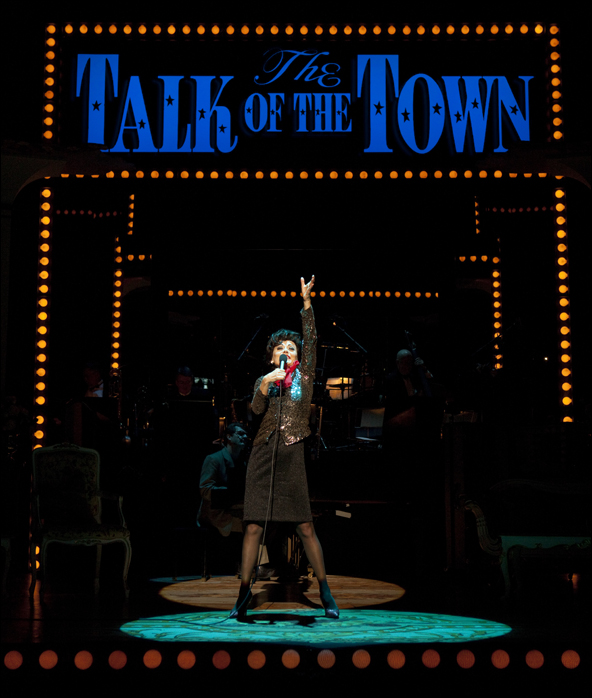
The new Broadway play End of the Rainbow provides a private view into several weeks toward the end of Judy Garland's life.  It also has at it's core one of the best performances I've seen on stage in years.  A performance that has stuck with me for days since seeing the show.

Tracie Bennett may not look exactly like Garland and her singing voice might not be perfectly in line with Garland's pipes but Bennett is giving  a virtual tour de force performance.  While not much private footage of Garland from the mid 1960's is available, there are several concert videos and recordings that show Garland's frenetic behavior.  As I'm sure you are aware, Garland was addicted to pills and alcohol, allegedly stemming from her teen years working in Hollywood and being given doses of drugs by the studio management of uppers in the morning and downers in the afternoon to get through the long days of filming.

Now the play itself is just okay.  It centers on Judy's December 1968 five week engagement at London's "Talk of the Town" nightclub, about six months before Garland's death.  There are three characters, Judy, her fiance Mickey Deans and her piano player Anthony. The play tries to accurately show the irrational behavior of an alcoholic and drug addict after years of abuse and how the two men closest to her have to deal with her and her rollercoaster of emotions.  Her new and much younger fiance Deans at first tries to be her protector and tries to keep her away from the alcohol and drugs but you know eventually he will have to give in to Judy.  Anthony, who doesn't care for Deans, sees himself as the calming influence in Judy's life, a good friend of hers from the past, who has come back to her to help her get through this part of her life.   Both men have a need to have Judy in their lives and they both end up using her and being used by her, but in very different ways.

Tracie Bennett
Garland is portrayed as more of a happy addict, just someone who yearns to live a simple life but also has the burning desire to be the center of the party.  Bennett perfectly portrays the idea of Garland being pulled in these two different directions and was spot-on when it came to the several performance moments throughout the show.  She so perfectly captured the way that Garland owned the stage, the way she would fling the microphone cord around and almost get tripped by it and how she connected with the audience, an audience who never knew if Judy was going to have an emotional melt down on stage or not.  I have no idea how Bennett is able to perform this 8 times a week as she deserves an endurance medal just for getting through a single performance.

I don't know exactly what research playwright Peter Quilter did into Garland's life or what if any of the plays plot is real, but I feel like I've now seen Garland live on stage, spent a couple of hours with her off stage and have much more sympathy for her then I ever had before. So if that was the goal of Quilter then he has succeeded.
Michael Cumpsty, Tracie Bennett and Tom Pelphrey 

Michael Cumpsty as Anthony is giving an excellent performance.  He is the calming person at the center of the Judy/Mickey world and he does so in such a personable way that I really hope he is remembered come Tony nomination time.  Tom Pelphrey as Mickey holds his one with Bennet's Garland, and you really get the sense that he does love her and is trying to help her succeed with her comeback and that he isn't just using her for her fame and fortune, what little fortune there was left at that time.

The show includes about ten musical moments where Bennett performs and it is at those moments when Bennett really comes to life as Garland.  You see the trouper who knows the show must go on but also the scared girl who just wants to be left alone.  A recording of the songs from the show, as well as several other Garland hits has been recorded by Bennett.  And while it would be just as easy to listen to the real Garland sing these songs it is thrilling to hear Bennett's take on them as well.

Now there were a couple of moments in the play that rang false for me.  It is mentioned several times that Judy would hide pills everyone - in her clothes, in the furniture, etc, so it seemed like more of a plot device then reality to have her pull out a bottle of pills in front of Deans that she had hid in the piano.  She did this as if she was showing off what she was capable of doing and to piss Deans off, instead of what we'd been told about how she hid the bottles from others.  This seemed to simply serve the purpose of instigating a fight instead of being based in reality.  Another moment that didn't seem real was when Mickey flips from being her protector to her enabler as it happened so suddenly without much build up.  Again, another moment that simply served to move the plot forward.

But still, this is Bennett's show and a performance you won't forget for a long time after the curtain comes down.   Bennett was nominated for an Olivier award for her work on the show in London last year and I have to believe she is the front runner for the Tony this year.

Official Show Site


Promo spot for the London run of the show.


An interesting inteview with Bennett where she talks about how she prepared for the role:


Bennett performs "Just In Time" at the 8 minute mark on this tv interview show clip:


Judy singing the same song in 1964:

theatre review TRAVESTIES, McCarter Theatre, March 18

Tom Stoppard's play Travesties tells the story of a man in Zurich who remembers three people he came in contact with around 1917.  Those three people just happen to be James Joyce, Lenin and Tristan Tzara, one of the founders of the anti-establishment movement Dada.  The man who tells us the story of his encounters with these famous men is Henry Carr, an English consular officer who is also somewhat of an amateur actor.

Now all four of these men were actually living in Zurich in 1917 but they most likely never actually met.  So while Stoppard has created an interesting memory play based on real people, in typical Stoppard fashion Travesties also has an overabundance of references to politics, philosophy, culture and art.  While I have enjoyed other Stoppard plays I did think that this was one where there was so much in act one that was unnecessary or that I just didn't seem to connect with.  I'm not sure if I'm just not in the core audience for Stoppard, if I'm just too beneath the material or too uneducated to get all of the references he makes.  And while you don't have to get all of the references to understand the main plot of the play, the fact that so much  of the material went over my head made me and I'm sure many others feel like an uninvited guest at a party.  I do believe the version being performed at the McCarter is an edited version from the original but I wish it was edited a little more as the first 30 minutes include many ramblings from the older Carr that didn't do much for me.  The second act is much better as that is where Carr's memory starts fading, replaying events differently and when the play connects better as a memory play of someone who may or not really have witnessed the events on display.  The second act is also much funnier than the first.

James Urbaniak, Everett Quinton and Christian Coulson
I did like how the actions of the play in many ways mirrors the actions of The Importance of Being Earnest, the play that Carr just happens to be appearing in an amateur production of.   There is also much humor in the play.  The direction by Sam Buntrock  is very good, and I also thought the cast was excellent.  James Urbaniak is Carr and does an excellent job in playing the older and younger versions of the character.  Christian Coulson perfectly got Tzara as the crazy, frenetic individual who had major issues with the more traditional Joyce, nicely played by Fred Arsenault.  The set design by David Farley was a lovely two story library with excellent use of the walls to transform it into Carr's home.

If you're looking for an intellectual night out at the theatre that will stretch your brain I'm sure you'll have a good time at Travesties.  However if you often get lost in political conversations like I do or if you have no idea what the Dada movement was then I'd stay clear of Princeton for the next week.

Official McCarter Site

Highlights from the production:

Tuesday, March 27, 2012

cabaret review CHRISTINE EBERSOLE, McCarter Theatre, March 17

An "End of the World" party might not be how most people would want to spend a Saturday night but with Christine Ebersole as your host, you'd better sit back, relax and enjoy what she has in store for you.  Two time Tony winner Ebersole is as equally known for her cabaret career as she is for her Broadway acting and singing.  Her concert in Princeton was another one of her typical, successful multi dimensional fun filled evenings.

Christine was accompanied by a lovely jazz quintet led by her musical director John Oddo.  The evening featured many standards delivered in a lively fashion.  Christine is known for her humor and clear soprano voice and her comic abilities were showcased in not only several funny patter bits between some of the songs but also in a humorous pre show speech.

"Strike Up The Band" was a highly energetic opening that showcased Christine's vocal abilities as well as the talents of her quintet.  "Paper Moon" was another highlight that perfectly blended a lovely jazz arrangement for the band with Christine's voice.  "Get Thee Behind Me Satan" also let Christine's clear vocals shine through but in a nice slowed down delivery.  Kurt Weill's "That's Him" is a funny song that has a touching message and the kind of song that perfectly combines Christine's comic and vocal abilities.

"What's Going To Happen to the Tots?" is a funny Noel Coward song that fits perfectly not only with Christine's voice but also her dry humor.  Her recording of several Noel Coward songs was one of my favorite CDs of last year.  (My review of that cd can be found here.)  "Johnny One Note" provided a chance for Christine to really show off her brassy voice.  A very funny story about Christine's early days in  New York City proceeded a stunning version of "42nd Street".

A lovey story about her three adopted children led into an excellent arrangement of "Right as the Rain" that gave Christine another chance to show off her clear delivery.  This was followed by a story about Christine's husband and a touching take on "I Loves You Porgy" that segued into an intense "Brother Can You Spare a Dime" that ended with an extremely moving take on the gospel standard "I'll Fly Away."  Christine ended her show with a rousing version of the Cole Porter classic "Blow Gabriel Blow" and then came back for a trio of encores that included an updated version of "Row, Row, Row Your Boat" as well as a nicely stated version of "Pennies From Heaven."

As great as Christine is and this show was, the only downside is that maybe having a better introduction as to why Christine decided to make this an "end of the world" celebration would have set the concert off in a better direction.  Instead she seemed to be explaining too late in the show her point of why she had chosen this theme for the evening.  But no matter what, Christine Ebersole is one of the best cabaret performers out there so if you happen to get the chance to see her in concert don't pass it up.

Christine sings "The Sage of Jenny" -


Saturday, March 24, 2012

theatre review DAMN YANKEES, Paper Mill Playhouse, March 17

The revival of Damn Yankees at the Paper Mill Playhouse is a perfect example of the kind of show that Paper Mill manages to always do a good job with.  It's a familiar Broadway show with several well known songs,  a mostly good cast, nice sets, choreography and overall makes an enjoyable night out at the theatre.

Nancy Anderson and the ensemble
The main plot of Damn Yankees focuses on baseball obsessed middle aged Joe Boyd who sells his soul to the devil to be young again and play for his favorite team to help them win the pennant. Of course once he is the younger Joe Hardy he realizes that what is most important to him might just be the life he left behind.  Can Joe win the pennant and take the escape clause he signed with the Devil to return to his old life in time or will the devil do everything he can to keep Joe's soul?  You can kind of guess how the show will end but it doesn't always go exactly the way you think it will.  This show had a major Broadway revival in 1994 where the book was changed somewhat and this production seems to have combined elements of both productions. However, the age of the book is really beginning to show with several plot points basically missing, or glossed over, which makes you wonder why audiences in 1955, when this originally premiered, never questioned some of the finer plot elements of the show.  It is still a fun, enjoyable show with some well known songs but, in my opinion, not one of the best musicals ever written.

Christopher Charles Wood and Chryssie Whitehead
Fortunately the score by Richard Adler and Jerry Ross has some great songs.  "Heart," "Whatever Lola Wants, Lola Gets," "Shoeless Joe from Hannibal Mo," "Goodbye Old Girl" and "Two Lost Souls" are all good musical theatre songs.  Adler and Ross had a big Broadway hit just a year before Damn Yankees with The Pajama Game but then Ross suddenly died shortly after Yankees opened.  He was only 29.  One can only wonder what future scores the two of them would have created if Ross hadn't died at such a young age.

Director Mark S. Hoebee has assembled a pretty good cast for the show.  Howard McGillin is having a devilish time as Applegate, the devil, and Joseph Kalinski and Patti Cohenour are touching as the older Joe and his wife Meg.  Christopher Charles Wood is making a very good Paper Mill debut as Joe Hardy.  He looks exactly like a young ball player, has a rich and pure singing voice and perfectly delivers in the more dramatic acting moments when he is with Cohenour.  The two of them have several touching scenes together.  Nancy Anderson is fun and brassy as the ballsy female reporter Gloria but Chryssie Whitehead as Lola, the femme fatale the devil calls upon to attempt to keep Joe's soul his, is just ok.  Whitehead is a lovely and talented girl but lacks the sexual charisma necessary to make the character what she needs to be.  She is too much of a "good girl" even when she is trying to be bad.  And while she is a very competent dancer she isn't really given a lot of choreography to show off what she is capable of.

Howard McGillin
Fortunately the lovely voices of Wood and Cohenour are well represented on several songs and the male ensemble and Nancy Anderson get a lot of fun choreography to show off their abilities.  Denis Jones provided the choreography and there were lots of different styles represented effectively including a fun vaudeville style turn for McGillin.

Sets by Rob Bissinger, costumes by Alejo Vietti and lighting by Tom Sturge are the usual top notch elements that the Paper Mill is known for and I did like how the ensemble cast looked like they could actually be baseball players instead of being cast with guys with your typical Broadway dancer builds.  Having a short and slightly stocky guy who is the catcher on the team dance and jump in line with his fellow more athletically inclined teammates provides a huge element of fun to the show.

Damn Yankees plays through April 1st.

Official Paper Mill Playhouse Site

Highlights from the production:


Thursday, March 22, 2012

cabaret review BETTY BUCKLEY, BB King's, March 16

I've mentioned before about how I am a huge Betty Buckley fan.  I've seen her dozens of times in concert as well on Broadway in Carrie and Triumph of Love and also saw her numerous times in Sunset Boulevard both in London and New York as well as her Carnegie Hall concert that was released on cd and her Off Broadway performance in Elegies.  I've basically followed her career since seeing her in Carrie in 1988, even though, like many others, I knew her from before she appeared in that show from her role on the tv show Eight is Enough and her Tony winning performance in the original Broadway cast of Cats.

Having seen Betty in concert so many times, I absolutely love how she is constantly updating her concert repertoire while at the same time not forgetting how her fans love to hear her singing some of the songs connected to her.  Usually her concerts are simply a collection of songs but lately she has had more "themed" shows.  A couple of years back she did a "Broadway by Request" series of concerts where she performed songs selected by the audience mainly in chronological order to tell her life story around her Broadway career.  Last Fall she premiered a new themed show "Ah Men!, the Boys of Broadway" where she sang many Broadway songs that were originally sung by men.  Her concert last Friday night at BB King's in New York City featured many songs from that recent concert series.

There really weren't any bad song choices that Betty made, but some of the highlights included a rendition of "Hey There" from The Pajama Game that she turned into a story of yearning love.  It is still haunting me several days later.  A rousing version of "Come Back To Me" from On A Clear Day You Can See Forever had a jazzy arrangement and Betty had a great time with the songs many fun lyric rhymes.

Her take on Sweeney Todd was stellar.  She performed a trio of three songs sung by the male characters in that show, combining "Not While I'm Around," "Johanna," and  "My Friends" into an emotional vortex of theatrical delight.  Betty commented that Sweeney was her favorite of  Stephen Sondheim's shows and it is easy to see her love for this show with the emotional and passionate connection she has to the material.

She similarly provided the same treatment for three Rodgers and Hammerstein songs, combining "We Kiss in a Shadow" and "I Have Dreamed" from The King and I as well as a solo performance of "Younger than Springtime" from South Pacific.  Betty's delivery of all three were simple, yet extremely effective in their portrayal of the passion of lovers both young and old.  "On The Street Where You Live" from My Fair Lady was performed with a jazzy, driving arrangement that with Betty's delivery of the lyrics brought out the yearning and unrequited love of one person for another.

However she didn't just present Broadway songs from the past but also sang one from a show she did a few years back, "Venice" from William Finn's Elegies.   Betty loves story songs and this is one of the best from the past 10 years.  Telling the story of Bill Finn's boyfriend's former lover and how he dreams of having them all go to see the beauty of Venice before he dies.  It is a funny, sometimes angry but extremely touching song about recognizing the passion of others and the beauty that we all strive for.

In Elegies, that song was sung by Betty's former Pippin co-star Michael Rupert.  Betty ended her concert with another song she heard Rupert sing nightly in Pippin, "Corner of the Sky."  Her upbeat arrangement for this song was buoyed by the joy of Stephen Schwartz's lyrics.   Other songs Betty sang included one of her more contemporary favorites "I Am a Town" from Mary Chapin Carpenter.  This story so effectively portrays the many facets of a rural town that anyone can easily relate to the joy and pain in the lyrics and in Betty's delivery of them.  She started the concert with a rousing version of "I Can See It" from The Fantasticks. 

Betty gave us two encores,  first she sang "More I Cannot Wish You" from Guys and Dolls, which she delivered in a clear, simple arrangement that drove home the pure meaning of the lyrics.  She followed this with "Home" from The Wiz where, about half way through the song, she started singing a later verse too early so she had to stop the song and start it over claiming it as a "senior moment" which brought roars of laughter from the audience.   The trio that accompanied Betty was led by pianist Christian Jacob who also provided many of the arrangements.  The only downside to the concert was that Betty didn't sing either one of the two songs that she almost always sings in her concerts - "Memory" from Cats and "Meadowlark" from The Baker's Wife.

Betty recently signed an agreement with the Palmetto record label and her cd she recorded last year "Ghost Light" is set to be released this Summer with a release of her "Ah Men" songs set to be released on cd sometime in the next year.

Betty has such an emotional intensity and connection to whatever material she sings and her concert last Friday night was another perfect example of her amazing abilities.  I'm looking forward to her upcoming cds, especially the one featuring the selections from "Ah, Men!".  Check out Betty's website for information on her upcoming concerts.

Performance clips and interview with Betty about her "Ah Men!, The Boys of Broadway" show:


Betty sings "Meadowlark"


Wednesday, March 21, 2012

One Year Anniversary!

One year ago today I officially launched my blog. 

I've had a great time writing my thoughts about theatre, movies and cds and appreciate everyone who's written to me, sent me cds to review and to all those people who simply stumble across my blog when they do a google search for various things.

I've got reviews coming over the next few days of Betty Buckley's concert at B.B. King's last Friday, an amazing cd from Robert Creighton, Christine Ebersole's cabaret show last Saturday night in Princeton as well as upcoming theatre reviews of the new Broadway shows End of the Rainbow and Ghost.

Thanks for reading!

Monday, March 12, 2012

broadway birthday -Happy 25th Birthday LES MISERABLES!

Les Miserables is one of those musicals that pretty much everyone around the world has heard of.  It officially opened on Broadway 25 years ago today on March 12, 1987.

The musical, based on the famous novel by Victor Hugo, opened tonight at the Broadway Theatre twenty five years ago after successful runs in France and the UK.

Happy 25th Birthday Les Miserables!