Thursday, July 17, 2014

theatre review PETER PAN, Arizona Broadway Theatre, July 11

Click here to read my review below at Talkin' Broadway of Peter Pan at the Arizona Broadway Theatre.
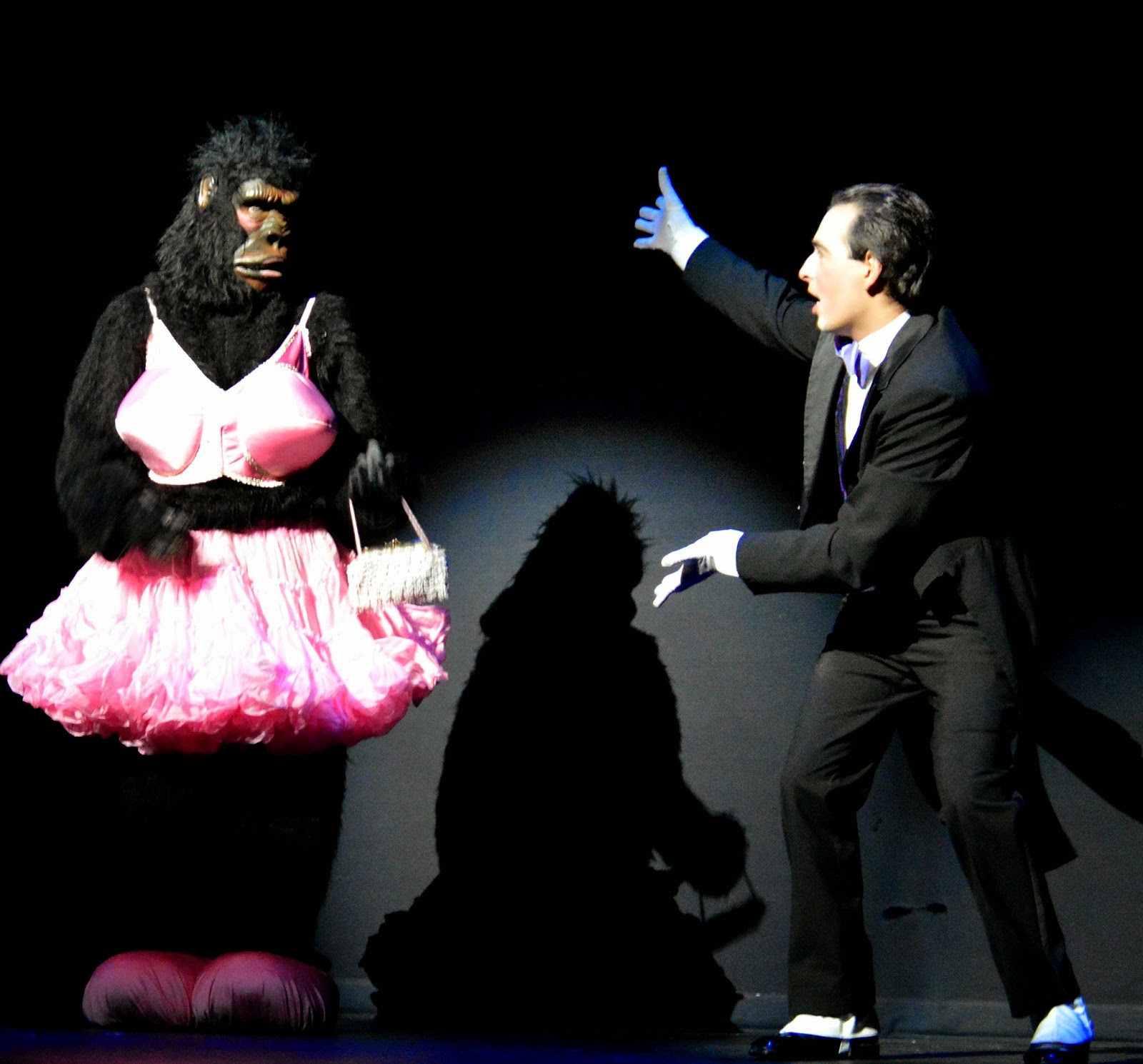
David Errigo, Jr., T.J. Rossi, Tristan Klaphake and Sarah Powell
About to celebrate its 60th anniversary, the classic family musical comedy Peter Pan has landed at Arizona Broadway Theatre in a spirited, colorful and, yes, "high flying" production that goes slightly against the tradition of previous Pan productions by casting a young man as Peter. Mary Martin famously brought J. M. Barrie's classic literary character to life in the 1954 Broadway musical, and then played him in three well received TV productions of the show. Other memorable mountings over the years featured Sandy Duncan and then Cathy Rigby as Peter, but having a young man in the part brings a new natural dimension to the character that serves the story well. The ABT production is appropriately light and comical but with a huge heart at the core.

Living far away from London on the island of Neverland with a group of other Lost Boys, the magical Peter Pan is a boy who refuses to grow up. After Peter and his mischievous fairy Tinkerbell visit the Darling family nursery in London one evening, a sprinkling of fairy dust and happy thoughts whisks the Darling children, Wendy, Michael and John, away to Neverland. Their non-stop adventures include encounters with pirates, Indians, mermaids, a crocodile who swallowed a clock, and the deliciously evil Captain Hook. The score, with music by Moose Charlap and Jule Styne, and lyrics from Carolyn Leigh, Betty Comden and Adolph Green, features such classic songs as "Neverland," "I'm Flying" and "I Gotta Crow."

David Errigo, Jr. affects a prepubescent voice to give Peter a youthful exuberance. His athletic physique adds a nice element of strength to Peter's dancing and flying movements and he instills a rousing, boyish charm in every line delivery, gesture and facial expression that culminates in a winning performance. However, since the score was originally written for a female to play the part, the changed keys for a male voice don't quite sit as well or allow Peter's songs to soar quite as much as they do when a woman plays Peter.

Jeremy Crawford and Kiel Klaphake
Kiel Klaphake seems to relish playing Peter's enemy, the dastardly Captain Hook, wringing the comical lines for all they're worth, but stopping short of chewing the scenery. And while his Hook is devilishly delightful, his portrayal of Mr. Darling is equally touching and sincere. The two performances are so distinct and different that it's hard to believe they are both played by the same actor. Klaphake also has a rich voice that he uses to great effect on Hook's songs.

Sarah Powell makes Wendy the rightly prim and proper English girl in her stern maternal dealings with Peter and the other boys but also adds a nice touch of sweet romanticism in portraying her school girl crush on Peter. Sure, we know Powell and Errigo aren't really youngsters, but they both do a remarkable job of making us believe that they are. Alissa Tucker gives Tiger Lily, the leader of the Indian tribe, a fierce strength, and Jeremy Crawford as the bumbling pirate Smee steals just about every scene he is in.

Director Mace Archer nicely balances the comical moments with the serious ones and choreographer Kurtis W. Overby provides plenty of energy, including a rousing "Ugg-a-Wugg" that has the entire ensemble banging on drums in well-choreographed, synchronized movements. Creative elements, as usual at ABT, are top notch, with colorful and creative sets by William Boles that include some nice comical scenery additions to the flying sequence over London. Creative costumes by Christianne Myers and vibrant lighting by Will Kirkham that paints the stage in rich, deep purples, reds and blues effectively combine with the scenery to perfectly delineate the more serious scenes in the Darling nursery from the comical and adventurous ones in Neverland. The flying effects by ZFX, who also provided the effects for the Rigby productions, are magical and include an abundance of flying throughout the show. The flying includes more than just having the actors swing back and forth and up and down across the stage as is done in many productions. ABT audiences get an additional bonus as, according to a ZFX spokesperson, an added flying rig that sends Peter out over the first few rows of the audience is something that only about 20% of the theatres that stage the show are able to accommodate.

With many well-known classic show tunes, plenty of adventure and many humorous situations, Peter Pan is an enchanting journey. The ABT production soars with its flying effects, fine cast and beautiful creative elements, but also is perfectly earth bound in honoring the rich emotional messages at the core of the story. As a true sign that the magic of theatre is alive and well, at the opening night performance, at the crucial moment in the show when Peter asks the audience if they believe in fairies, one young audience member in the front section, rapt in attention, immediately commented "I believe in fairies." The genuine, soft spoken yet completely serious statement quickly brought gasps and, I can imagine, more than a few choked up tears for those in the audience, and even caught Errigo off guard with the magic that only live theatre can create.

Peter Pan runs through August 17th, 2014, at the Arizona Broadway Theatre, 7701 West Paradise Lane in Peoria. Tickets can be ordered at azbroadway.org or by calling 623 776-8400.

Photos: Mike Benedetto / Arizona Broadway Theatre

Tuesday, July 15, 2014

theatre review FOOTLOOSE, Hale Centre Theatre, July 10

Click here to read my complete review (highlights below) at Talkin' Broadway of Footloose at the Hale Centre Theatre.

It's hard to believe that it has been thirty years since the movie Footloose was such a huge hit at the box office. The soundtrack, with such songs as "I Need a Hero," "Let's Hear It for the Boy," "I'm Free" and the title song, was also a smash, holding the #1 spot on the US Billboard 200 chart for over two months. While the film wasn't an actual musical, since none of the characters sang any of the songs, in 1998 the movie was adapted into a Broadway musical featuring many of the songs from the film along with additional ones written by Tom Snow and Dean Pitchford, both of whom had written songs for the movie soundtrack. A fun, upbeat coming of age story with a big message about the need to fit in and the desire to change people's lives for the better, Footloosewas the perfect feel good summer movie, and the musical is equally as fun, filled with lots of dancing and buoyant, infectious songs. With a cast of young gifted actors and singers, the Hale Centre production that just opened is a skillfully sung and danced show that offers a fun and joyous night out.

High school student Ren McCormack and his mother have just moved to the small town of Bomont from Chicago after Ren's father deserts them. They've moved to Bomont to live with Ren's aunt and uncle, and Ren quickly realizes that his Chicago style and way of doing things clashes with the small town's rules, specifically one enforced by the local minister Reverend Moore that bans dancing and rock music due to their negative influences on the children in town. Of course, when Ren falls for the minister's daughter Ariel it only makes matters worse, especially since Ren's outgoing personality is seen as a negative influence. Ren sets out to discover the reasons behind the ban on dancing as well as a way to bridge the gap between himself and the ultra-conservative Moore.

Footloose is a show that requires a lot of dancing and director/choreographer Cambrian James has assembled a terrific cast that more than manages their way around the varied and exuberant steps he has created for the show. Connor Wince easily makes Ren the likeable outcast who is just trying to fit in, and his exuberance is displayed through exceptional and impressive dance moves, including an abundance of acrobatic flips. He has a pleasant signing voice as well as an assured delivery of his dialogue which contribute to a nice interpretation of the role.

As Ariel, the minister's daughter who falls for Ren, Jacqueline Brecker gets across that Ariel is smart and funny and knows exactly what to do in order to get what she wants. She brings a nice energy to her performance as well as a voice that solidly negotiates the pop/rock score. While she and Wince come across more as good friends who might be interested in each other, instead of a couple in a relationship with sultry, burning desire at its core, they do have one passionate kiss that adds a bit of heat to their G-rated romance.

Brandon Zale is appropriately righteous and stern as Reverend Moore, but instills the part with an element of compassion and understanding that I've not seen in previous productions. He makes Moore sympathetic and not an out and out villain, which works well. He also has a rich and powerful singing voice that he uses very effectively for Moore's songs. Brandi Bigley and Jennifer Whiting deliver touching and heartfelt performances as the moms of Ariel and Ren, respectively. They don't have a lot to do in the show, but Pitchford and Bobbie have given them both rich, clear and succinct dialogue that, when combined with Bigley and Whiting's genuine performances, manages to do a lot with a little.

Kate E. Cook and Danny Karapetian are fantastic as Rusty and Willard, Ariel and Ren's friends who have a budding romance of their own. Cook has one of the strongest, clearest voices in the non-professional Phoenix Theatre scene, managing to make an excellent impression in every role she performs, and she more than succeeds as the fast talking Rusty. Her delivery of "Somebody's Eyes" is superb. Karapetian is just as good as the slow-witted but endearing and charming Willard. He provides a skilled delivery of Willard's humorous lines and excels in his solo comical song "Mama Says."

James' staging is fantastic and his dance steps are continually changing from song to song. He proficiently fills the entire stage, the staircases, platforms and entry ways with his cast during "Somebody's Eyes," which ties in perfectly with the song's lyrics about how, no matter where you go, "somebody's eyes are watching." For the dream sequence delivery of "I Need a Hero," he expertly has his ensemble maneuver four large tables into a rotating platform for Brecker, Cook and their friends to perform upon, and then just as quickly move them back as if the dream never happened. I also like his honky tonk staging of the country inspired "Let's Hear It For the Boy" that Cook knocks out of the park while the ensemble delivers some nice line dancing steps. James' only misstep is a slightly muddy and cluttered opening sequence for the title song that has his cast performing some awkward movements. Fortunately, that and the slightly non-passionate relationship between Wince and Brecker are the only very small negatives in the whole production.

Creative elements, as usual with a Hale show, are excellent. Set designers Adam DeVaney and Brian Daily use an abundance of small moveable set pieces to whisk us from one location to the next, Mary Atkinson's costumes are colorful, character appropriate and abundant, and Jeff A. Davis' lighting design provides appropriately bright sequences for the daytime scenes and plenty of shadows and darkness for the evening ones. He also uses a lot of effective "rock star" style lighting for the upbeat songs. While there were a few small sound glitches, I have to believe they were just opening night kinks still needing to be worked out.

Footloose is a fun-filled show perfect for the hot summer months. It's fun, fast and brimming with singing and dancing. The Hale Centre Theatre production has excellent choreography and a hard-working cast that manages to instill this simple story with a shot of charm and sincerity on top of a wealth of nonstop dancing.

The Hale Centre Theatre production of Footloose runs through August 23rd, 2014, with performances at 50 W. Page Avenue in Gilbert. Tickets can be ordered at www.haletheatrearizona.com or by calling (480) 497-1181

Photo: Nick Woodward/Hale Centre Theatre

theatre review THE AGONY AND THE ECSTASY OF STEVE JOBS, Actors Theatre, July 9

To read my Talkin' Broadway review of The Agony and the Ecstasy of Steve Jobs at Actors Theatre just click on this link.

Ron May
American playwright, monologist and performer Mike Daisey created quite a stir in 2010 with his one man show The Agony and the Ecstasy of Steve Jobs. The ninety minute monologue delves into the history of technology giant Apple, its co-founder and former CEO Steve Jobs, and the specifics of how many of the world's electronics, including products from Apple, are made in China under harsh work environments. Daisey and his play won accolades for the powerful storytelling and the ability to make us think about just what goes into making our electronic devices. While it was later revealed that Daisey exaggerated or dramatized a few of the items, facts and encounters in his monologue, it is still a stirring analysis of the world's fascination with technology and the cost that allure entails. Actors Theatre presented the play back in the Fall of 2012 and they've brought the show back for a return engagement for a few performances this month as part of their Summer Series. Ron May, the Founding Artistic Director of Stray Cat Theatre, who starred in the previous production, returns for this encore presentation.

According to Daisey, about half of the electronics made in the world are manufactured in one single factory complex in Shenzhen, China by a company called Foxconn. While most of us think everything today is made by machines, that is actually not the case, as the low cost of wages in China means thousands of hands are working, essentially around the clock, to make the latest "must have" electronic gadget. The stories of the inhumane working conditions of these workers in China, and the details of Daisey's visit to Shenzhen make up the "agony" in the title of the play. Daisey's passionate words tell of over 400,000 workers in China, some working 12-16 hours a day, at low wages, doing repetitive motions with their hands that make them virtually useless within ten years. A series of suicides, with workers jumping off the top of the large Foxconn buildings in Shenzhen, can only be assumed to be attributed to the conditions of working at Foxconn.

But Daisey effectively balances the horror stories of the workers with the fascinating story of Apple and the rise, fall and rise again of Steve Jobs and the world's fascination with the sleekly designed products from Apple. The humorous tales of the mystical, God-like Jobs, and of our intense focus on having latest and greatest electronic gadgets form the "ecstasy" in the play's title. These humorous and absorbing stories counter the dramatic tales of the workers in Shenzhen to form an illuminating piece that really makes you think about everything that goes into making that electronic device in your hand, pocket or purse. Daisey obviously wants to raise awareness of the inhumane working conditions in China, and alternating the story of his trip to Shenzhen with the story of Apple's success culminates in a play that resonates with tech heads, geeks and just about anyone who has ever wondered what went into making their phone and other devices. Though, for those less tech savvy, or those less familiar with Apple and Jobs, it might be just a bit boring. This production, like the one two years back, is the edited version of the play that eliminates the fabricated items that Daisey admitted to making up. And, while the majority of Daisey's verbiage is focused on Apple, he does mention several times that Apple isn't the only company involved in the manufacturing of products in China in grim working conditions.

Ron May is splendid as Daisey, with an intense, natural delivery of the words that makes you believe May himself actually visited Foxconn and had intimate details of the creation of Apple. I have no idea if May is actually a self-proclaimed geek, techie or Apple product aficionado who takes his MacBook apart to clean every piece in detail, as Daisey admits to doing in the monologue, but based on May's intense, realistic performance, I'm prepared to have him help me with all of my computer needs. May also relishes the humor in the script, with a spirited delivery of the comic lines as well as a nice ability to use different voices to portray the various characters in the piece, such as Apple's co-founder Steve Wozniak. It is an impressive performance.

Matthew Wiener's direction allows the clear storytelling and May's performance to flow naturally, with appropriate movement around the stage when necessary. Tim Monson's lighting design is simple and clean, providing a nice balance of light that complements Daisey's stories and May's performance.

Daisey's play is a funny, sharp and pointed monologue, and the combination of Daisey's words and May's delivery form an immersive exploration of Apple, Jobs and our focus on technology. It might make you feel a bit uncomfortable and make you think a little differently the next time you go to look at your phone, laptop or any fancy electronic item, which is exactly what Daisey was attempting to do. The Agony and the Ecstasy of Steve Jobs and Ron May's outstanding performance tell a tale that will slowly gnaw away at you and really make you think.

The Actors Theatre production of The Agony and the Ecstasy of Steve Jobs plays again on July 12th and July 23rd, 2014 at the Black Theatre Troupe/Helen K. Mason Performing Arts Center, at 1333 East Washington Street in downtown Phoenix. Tickets can be ordered at http://actorstheatrephx.org/ or by calling (602) 888-0368

Photo: John Groseclose

Saturday, July 12, 2014

theatre review THE COTTAGE, Actors Theatre, June 28

To read my complete review at Talkin' Broadway of The Cottage click on this link.

Tyler Englen, Angelica Howard, Joe Kremer and Maren MacLean
One of the most impressive things about the new play The Cottage, receiving its Arizona premiere in a superb production from Actors Theatre, is that it was written by a modern American playwright yet exudes all of the wonderful elements of classic Noël Coward English drawing room comedies. This wickedly delicious comedy of manners is delivered by a superbly skilled ensemble of actors, with swift direction and terrific creative production aspects. What is even more impressive is that this cast is also appearing in the equally funny modern comedy The Book Club Play, in repertory through August in Actors Theatre's first Summer Season of Theatre program.

Playwright Sandy Rustin has crafted a play that is extremely entertaining but also has crisp, clear realistic dialogue of the period, razor sharp humor and hilarious situations. Inspired by the works of Coward, the play is dripping with comical circumstances and English upper crust sensibilities, it is humorous yet also full of heart. Actors Theatre has chosen wisely in how this 1920's English set play serves as a nice counterpart to their modern day, American set The Book Club Play, with each play running on alternating weekends.

It is 1923 and Sylvia and her lover Beau, who also happens to be her brother in law, are spending their annual romantic rendezvous at Beau's family's cottage. Tired of only having these once a year get-togethers for the past seven years, and unbeknownst to Beau, Sylvia has already sent telegrams to their spouses alerting them of their on-going tryst and letting them know they intend to leave their spouses and be together. Over the next ninety minutes Beau's brother Clarke and Beau's wife Marjorie will descend upon the cottage to confront the lovers as will Beau's other lover Dierdre and her jealous ex-husband Richard. To say any more of the plot will spoil the fun, but there are twists and turns galore with secrets revealed and plenty of laugh out loud moments sprinkled throughout the fast moving two act play.

As they demonstrated in The Book Club Play, the cast is a talented group of individuals who skillfully form a superb comic ensemble. Everything in The Cottage revolves around Sylvia and Maren Maclean couldn't be any better in the role. With comically expressive facial gestures and a sly, witty delivery of words, she wrings every comic moment and nuance from every line of dialogue and situation. Joseph Kremer's Beau, is equally impressive. Unlike his Book Club Play character, who is less educated and knowledgeable than the rest of the group, here he plays the intellectual lawyer, and has the appropriate demeanor and speech for the character. Kremer also has no problem portraying a classic and dashing ladies' man, full of pomp and swagger and wryly delivered statements.

Angelica Howland is a comic gem as Beau's very pregnant wife Marjorie. Howland's Marjorie is infused with proper English manners yet delivers charming sarcastic comments, though she never loses her temper with all of the craziness swirling around her. Like Maclean, she also uses her body for humor, including easily balancing her teacup on her pregnant belly and using just her enormous stomach, sans hands, to push open the door to the kitchen with ease. Tyler Eglen gives Clarke the typical qualities of the staunch Englishman who makes absurd and dry comments, but with a sweet, mannered disposition. Beau's other lover, Dierdre, is played by Alexis Green as charming and endearing, yet we easily see how she is also gullible and naïve. Green is completely committed to the part which includes several instances of physical humor where she ends up laid out on the floor or spread out on pieces of furniture. Ian Christiansen instills Richard with a sweet disposition, yet cuts a nice menacing stature when required to portray the jealous lover.

As he equally achieved in The Book Club Play, director Matthew Wiener skillfully guides his cast into a well formed ensemble, ensuring they don't step on each other's lines, but deliver every comic line efficiently and imbue their characters with the charisma required for this appealing and hilarious farce. All six of the actors have also created realistic and rich English accents that are consistent throughout.

Creative elements are as fun and charming as the play with a set design by Jeff Thomson of a rustic yet colorful and sunny British cottage that exudes as much warmth as the characters. Lively costumes, by Lois K. Myers, are authentic to the 1920s period of the show and as flattering and impressive as the striking hair and make-up designs by Terre Steed. Combined with the bright, cheerful lighting by Tim Monson and Christopher Neumeyer's sound design that includes several well timed sound effects, including one moment of particular hilarity, there isn't one misstep in the creative aspects of this production.

Sandy Rustin has written a fun, fast paced comedy with razor sharp humor that shows people who are "stuck in the wrong marriages" and escalates into a rollicking farce when everything goes dreadfully wrong. But underneath, the play has a sweet sensibility that also comments on the subjects of marriage, sex, fate and, most importantly, love. I believe The Cottage will become a staple comedy all over the country; the Actors Theatre production has the perfect cast, direction and creative aspects to make it vibrant, hilarious and full of heart.

The Actors Theatre production of The Book Club Play runs through August 10th, 2014, at the Black Theatre Troupe/Helen K. Mason Performing Arts Center, at 1333 East Washington Street in downtown Phoenix. Tickets can be ordered at http://actorstheatrephx.org or by calling (602) 888-0368

Photo: John Groseclose

theatre review CABARET, Scottsdale Musical Theater Company, June 27

Click here to read my review at Talkin' Broadway of the Scottsdale Musical Theater Company's production of Cabaret.

Petey Swartz, Michele Kahn and Matt Earnest
The Scottsdale Musical Theater Company prides itself on presenting the original versions of classic Broadway musicals, with big casts, real sets, lavish costumes and a live twenty-piece orchestra. Their recent production ofCabaret, which ran for three performances this past weekend, while not the actual original 1966 Broadway version of the musical, but instead the slightly revised 1987 version, proved a worthy production, though with a few reservations. While not quite as successful as their recent production last fall of The Music Man, SMTC's latest show did benefit from their move to the Tempe Center for the Arts, which provided better artistic options including a larger stage, sunken orchestra pit, and ample fly space above, all set against the beautiful surroundings of the lavish Center for the Arts and the Tempe Town Lake.

Christopher Isherwood's 1939 novel "Goodbye to Berlin" told stories of his time living in Berlin around 1930. John Van Druten adapted the novel into the 1951 play I Am a Camera and, drawing upon both sources, book writer Joe Masteroff, composer John Kander and lyricist Fred Ebb created Cabaret. Most of the musical is set inside the Kit Kat Klub, a decadent Berlin nightclub in 1931 with a mischievous Emcee overseeing the proceedings of its carefree customers, while Hitler's rise to power is happening just outside its doors. But it is also the story of two very different couples, at different stages in their lives, facing very different obstacles. Penniless American bisexual novelist Clifford Bradshaw (Matt Earnest) has just arrived in Berlin to work on his novel. Sally Bowles (Michele Kahn), the English Kit Kat headliner, after a chance meeting at the club with Cliff, shows up on his doorstep looking for a place to live and they set about forming an interesting living relationship. Meanwhile, Cliff's middle-aged landlady the German Fraulein Schneider (Petey Swartz) and the sweet, charming Jewish fruit seller Herr Schultz (Ron Jennings) have a blossoming romance of their own. With the Nazi regime on the rise, everyone's life in Berlin is about to change. As Sally continues to proclaim that "life is a cabaret," the world outside is set to come crashing down all around her as well as everyone else in Germany.

While the show seems almost tame now in its attempt to be shocking, one can only imagine what the experience was like to see it when it first premiered almost fifty years ago. I'm sure the combination of anti-Semitism, swastika-wearing cast members, talk of abortion and sexual proclivities was enough to raise the ire of many audience members. The addition of an Emcee that sheepishly draws the audience into the era, and comments mockingly on the atrocities around us, was also a nifty way to frame the proceedings and deceptively reflect and make audiences in 1966 realize that the show was eerily also about the modern day horrors always lurking right outside their door. The recent 1998 Broadway revival that starred Alan Cumming as the Emcee, which received a revival itself on Broadway this season, added many elements to ratchet up the shock factor but also wisely honed in on and clarified the relevance of the horrors of Nazism.

Director David Hock's decision to stick with an older version of the show is worthy, in that it provided audiences the chance to see what the show was like before director Sam Mendes heightened the sexuality in his 1998 production. While this older version is more of a museum piece today, with very little in the way of shock value, it also delivers slightly watered down elements that Mendes also heightened, specifically about the upcoming results of the Nazi regime. However, the SMTC production provided a glimpse into what made the original production so successful. It is an interesting look back at the desperation of the era, the horrors lurking in the shadows, and the inability for anyone to completely comprehend what the consequences of Hitler's power would have to Germany, and ultimately the entire world. With so many people today willing to turn a blind eye to situations such as political unrest in third world countries, poverty and other worldly topics such as climate change, the thematic elements of the musical are actually still relevant today.

Ashley Nebeker and Matt Newhard
The SMTC production excelled in its casting, but fared slightly less well in its production elements. Michele Kahn easily made us believe that Sally was the self-proclaimed "mysterious and fascinating" lady she claims to be. Her carefree demeanor echoed the self-obsessed person who isn't even aware of the ramifications of the rising political situation as well as someone who never seems to make the right decisions. Kahn made Sally appropriately forceful yet charming, easily showing us a woman who gets what she wants, and delivered some of Sally's most famous lines assuredly, including, "Politics? What's that got to do with us?" Kahn also showed us Sally's vulnerability and her singing voice was powerful, including a grounded delivery of the title song.

As the Emcee, Matt Newhard veered away from the overtly sexual nature that Cumming brought to the recent Broadway revival, but also wasn't the somewhat creepy, asexual version that Joel Grey created in the original production and subsequent 1972 film. Instead, Newhard made him an entertainer, here to take his audiences away from the harsh realities that are just outside the doors of the Kit Kat Klub. This simple decision was best achieved in one effective scene where Hock had the Emcee remove his white pancake face make-up and rouged cheeks and we saw the ordinary man underneath the facade. Sure, he prances about the stage, sings like a bird and ogles the ladies in the audience, but Newhard made us see that he is a human, just like the rest of the characters in the play, and dealing with the same obstacles every other person in Germany at the time was facing.

Matt Earnest's take on Cliff was a bit hesitant. Earnest showed a pleasant singing voice and nice line delivery but we didn't quite see from his actions what made him so attractive to the other men mentioned in the show, let alone to Sally, since he wasn't quite sure of himself. A bit more emotion and less of the extra unnecessary busy work, including pacing and hand gestures, that made him seem a bit antsy, would greatly help. Still, overall it was a more than serviceable performance.

Petey Swartz and Ron Jennings were superb as Fräulein Schneider and Herr Schultz. We got a sense of warmth and sentiment from them that made their attraction to each other and the richness of their characters realistic. They both also easily made us understand that these two characters had both been alone for so long, it made them a bit hesitant about their budding relationship. Swartz' delivery of her solo "What Would You Do?" was simple, emotional and extremely effective. Schneider is a survivor, yet one easily felt the regret and pain from Swartz' portrayal of Schneider's suffering in her delivery of that song. Hector Coris had a perfect German accent and demeanor as the Nazi sympathizer Ernst Ludwig, instilling just the right amount of charm, with menace beneath the surface.

Overall, Hock's direction was good, with nicely staged dialogue scenes and good use of the expansive Kit Kat Klub space, though some of the larger group scenes, including the "Telephone" number and especially the act one closer, were muddy and not directed, or lit, in a way to easily show who we should be focusing on. Choreographer Bill Hotaling delivered some impressive Kit Kat Klub routines that featured varied dance steps, including a nicely done "Don't Tell Mama" with fine-tuned chair choreography. Rachel Gordon Smallwood's scenic design encompassed a fairly expansive Kit Kat Klub set with a series of stairs and entrance ways, though the wall of the set was placed so far in the back that it was hard to appreciate the details of the design. The small set for Cliff's apartment room and the hallway of the house were appropriately dingy with pealing wallpaper on the walls. However, the numerous set pieces and props used for Cliff's apartment required much more time to move on and off stage, making the scene changes far longer, and noisier, than necessary. Bret G. Reese's lighting was adequate with the book scenes brightly lit, but the night club scenes were a bit too dark. Ken Olash's sound design suffered from some crosstalk and mic issues, problems understandable since this is the first time in the venue. Hopefully, most of the shortcomings in the creative aspects were remedied once the technical team had more performances under their belts to address the issues.

Not quite as dark, or anywhere near as sexual, as the most recent Broadway revival, the Scottsdale Musical Theatre's production of this landmark musical was a nice look back at what shocked audiences almost fifty years ago. Most of the shortcomings of this production were limited to the somewhat watered down aspects of the original play that are still vague in the updated book for the 1987 revival. While it still served as a reminder of how we all can be complacent or in denial about certain issues we feel don't affect us, there was still some hesitation in the direction and acting, and some missteps in the creative elements. However, as being the only theater company in the Phoenix area that relies on the enormous sound that a live twenty-piece orchestra creates, and with their large casts and the added creative benefits of the move to the Tempe Center for the Arts, SMTC seems to have everything lined up for success.

The Scottsdale Musical Theatre Company's production of Cabaret ran from June 27th to the 29th, 2014, with performances at the Tempe Center for the Arts, 700 W. Rio Salado Parkway. You can get information on their upcoming production of The Producers, which plays from December 31, 2014, to January 3, 2015, atwww.scottsdalemusicaltheater.com. Tickets can be ordered by calling 602-909-4215

Photos: Jessica Cole

Monday, June 30, 2014

cd review DAVID CAMPBELL SINGS JOHN BUCCHINO

Australian singer and actor David Campbell burst onto the New York City cabaret scene around 1997, releasing two solo cds back to back, performing at the infamous club Rainbow and Stars and followed this with roles in the City Center Encores production of Babes in Arms and the Off Broadway premiere of Stephen Sondheim's Saturday Night.

I've posted my review of one of his recordings "On Broadway" before but of note is that on one of his first cds, "Taking the Wheel" he recorded some songs by another up and coming performer at that time, the composer John Bucchino.  While Bucchino has had success as a composer of musicals, including making it to Broadway with his score for A Catered Affair in 2008, his songs have been a staple of cabaret singers for over twenty years now.  Bucchino also wrote the songs for the animated film Joseph: King of Dreams and Campbell provided the singing voice for the title character.  So these two men have formed a friendship that has lasted for close to twenty years, and it's nice that they have finally come together to record an entire album of Campbell singing Bucchino songs.  The title of the album? - a fitting David Campbell Sings John Bucchino.

Bucchino's lyrics tell stories or express emotions in a succinct way with well crafted words and rich imagery and his music never overclouds the lyrics, somehow equally serving them and elevating them so each of his songs becomes something greater than just the sum of the music and lyrics alone.  His songs are so good that it's understandable why they have been performed and recorded by many Broadway and cabaret A-listers.  In fact two of his songs, "Grateful" and "Sweet Dreams" - both present on this recording - have become concert staples for Brian Stokes Mitchell and Barbara Cook.  Campbell's warm, strong voice and clear diction not only shows off his range and musical skill but naturally gets to the emotion and feeling beneath Bucchino's lyrics.  Bucchino plays the piano for all of the tracks and is naturally adept at delivering superb renditions of each of his songs.

The cd begins with the simple playing of a few notes on the piano from Bucchino of the deeply emotional song "Sweet Dreams" that tells the story of a kept gay man and a battered woman who meet in a bus station and discover they are both trying to run away from their pasts, only to find that the dreams they have of a sweeter life are elusive. Campbell's vocals, especially his heartfelt delivery of the lyrics "run away to another skin, a tough one, a pretty one, that won't let the sadness in, won't let the madness win" is wrenching.

"Something Spontaneous" has some witty lyric work from Bucchino in this fairly simple yet winning song about people being too serious, planned and structured to not allow any chance at humor or spontaneity.  Campbell has no problem in navigating around the tricky lyrics, including my favorite "we'll have a talk about how we talk about how we talk too much."  "Unexpressed" - a song I first heard when Patti LuPone sang it in the late 90's - finds Campbell's rich vocals serving the lyrics about someone who has so much love, yet no one to give it to, with Campbell getting the nuance out of every one of Bucchino's lyrics.

The upbeat "Puddle of Love" nicely breaks up the heavier ballads that come before it on the cd.  Campbell's solo from Joseph: King of Dreams, "Better Than I" is a powerful soul searching song about a man at a crossroads, but knowing that someone is watching over him, with the simple yet superb lyric "If I let you reach me, will you teach me?"  "Learn How to Say Goodbye" is another song with intricate driving lyrics from Bucchino that Campbell expertly delivers.  Campbell's last sustained note is impressive.

Campbell does justice to "It Feels Like Home" - a song the late singer Nancy Lamott recorded in a superb version back in the 90's of two people in love at the beginning of a relationship that some people think wrong but find the feeling of home in the simplest of things.  Campbell's voice has a nice gritty feel on the bluesy "What You Need, " a song about loners who find that together they might be able to make it.  "If I Ever Say I'm Over You" is a fairly simple song but one with well crafted lyrics from Bucchino about s person not being able to get over someone, even though they try to say they are.

The cd ends with two songs that Campbell recorded before, back in 1997 on one of his first recordings.  And while it might seem odd to record songs that he recorded before, hearing the same songs sung almost twenty years apart, with all of the life experiences that Campbell has learned over the years, makes them very effective.  While the bouncy "Taking the Wheel" gets a nice retread it is the final song on the cd "Grateful", which interestingly enough was the first track on Campbell's "Taking the Wheel" cd, but works much better as a closing track, since it is a summation of what Campbell and Bucchino feel.  "Grateful" is a nice and fitting end to the cd with lyrics such as "but giving thanks for what I've got makes me so much happier than keeping score" with Campbell instilling each word with truth that shows how truly talented and blessed both Campell and Bucchino are.

My only complaint?  The cd only includes 11 of Bucchino's incredible songs.   Hopefully there will be a "David Campbell Sings John Bucchino - Volume II."

Commercial for the cd:

"Better Than I" from Joseph: King of Dreams -


"What You Need" -


Tuesday, June 24, 2014

theatre review THE PIRATE QUEEN, Paradise Valley Community College, June 22

For my complete Talkin' Broadway review of The Pirate Queen, highlights of which you can read below, just click on this link.

the cast including (center) Andrew Lipman, Andrea Robertson and
Ken Goodenberger
The composer/lyricist team of Claude-Michel Schönberg and Alain Boublil had back to back global hits in the late 1980s with their scores for Les Misérables andMiss Saigon. Their attempts to find musical theatre success since then have failed miserably. The Pirate Queen, their only other musical ever to make it to Broadway, opened in April 2007. With the creators of Riverdance, they wrote a musical based on Irish legend Grace O'Malley, but the overblown production met with negative reviews from critics and ran for less than three months.

Paradise Valley Community College's Director of Theatre Andrea Robertson, having liked the music for The Pirate Queen as well as the historical context of the story, thought it would be interesting to produce a show by two very well-known composers that no one else had been able to present. She went through the process of securing the rights to this currently unlicensed show, working with Schönberg and Boublil's representatives, and is now not only producing but also starring in what has become the first U.S. staging of the show since the Broadway production.

Set in Ireland in the 1600s, determined Grace O'Malley, disguising herself as a boy, defies her pirate father Dubhdara and manages to secure her way aboard his ship. When a storm threatens the boat, she single handedly saves it, proving her worth to her widowed father. Later, on her father's request, Grace agrees to marry Donal, the son of the Chieftain of a rival Irish clan to strengthen the two clans and to show they trust each other, thus betraying her true love from childhood, Tiernan. Meanwhile, across the sea in England, Queen Elizabeth I is humiliated by Grace's clan's attacks on the English fleet and sends Lord Richard Bingham to seize control, which ultimately builds to a confrontation in the second act between Pirate Queen Grace and the Queen of England herself. With two strong-willed women at the helm, The Pirate Queen is a musical full of soaring ballads and songs of determination that portray the deep love for one's country, the strong emotions of separated lovers Grace and Tiernan, the rich genuine history behind the battles, and the ultimate meeting between Grace and Queen Elizabeth I.

The reason the show failed and the flaws of The Pirate Queen are very apparent. The through-sung nature of the score, similar to the other Schönberg and Boublil shows, which eliminates virtually all dialogue, makes some of the plot points and settings of the scenes confusing. While the score includes several attractive ballads and the history behind the story of Grace is intriguing, there are several similar sounding numbers, some clunky tunes and sung dialogue with underscoring that is repetitive. And, unlike a blockbuster film with a pirate or historical theme, there really is no way to accurately portray elaborate sword fights and battles across the decks of two ships on a stage. However, while the majority of the score sounds somewhat reminiscent of other Schönberg and Boublil shows, especially another one of their flops, Martin Guerre, and while several of the ballads are similar in nature, even a lesser score from these two composers is worth paying attention to and better than many of the new musical scores out there. This is a case of a show where the pros just slightly outweigh the cons and Robertson's determination allows Phoenix residents the chance to see a show that not too many people in the U.S. have seen.

This production has more than capable actors in the leads, with the cast made up of actors from the school and faculty as well as from the community. Robertson brings an Irish earthiness to Grace, making her appropriately strong, feisty and athletic. But she also easily portrays the soft side of this larger than life character and the love she has for both her father and Tiernan. Robertson has a legit voice that, while not making the songs soar to the rafters the way that Stephanie J. Block did in the role on Broadway, gives them a more realistic, grounded delivery. Her expressions are also perfectly conveyed, whether they be the sheer joy of being on the deck of a ship and using her sword to fight or those of a sullen nature when she is basically forced to marry a man she doesn't love.

Ken Goodenberger has a gorgeous voice that makes Tiernan's songs soar, and he has several. He and Robertson have good chemistry, making their romantic relationship realistic. Goodenberger's stage presence, facial expressions and body language when he is around Grace or her husband accurately portray a man who is in love with a woman yet cannot be with her. Andrew Lipman as Grace's father Dubhdara delivers an emotionally grounded performance with a deep, rich singing voice that brings resonance to the relationship he has with Grace, his people, and with Ireland. The fact that Lipman's performance is exceptional is especially noteworthy as he was a last minute replacement for an actor who suffered an accident, and Lipman had less than a week of rehearsal time. If you saw Lipman providing plenty of comical moments just a few weeks back in the Mesa Encore Production of The Full Monty, or Big River in April, this is a nice chance to see him show his serious and emotional side.

Director Gary Zaro provides a swift moving production, which says a lot with such a fairly large cast, numerous set pieces, and an abundance of scene changes. His leads are up to the challenge of this through-sung show and he provides nice ensemble work, especially in how he portrays them doing activities like the ship's busy work in the background of the scenes on the boat, as well as in the ensemble work in the fight scenes that Robertson directed. Zaro has staged the scenes effectively, not just using the center stage, though his direction of the funeral scene, where a boat carrying a body is lit on fire and sent off to sea, could be slightly better staged to have the ensemble move away from the boat toward the end of the scene to portray it moving out to the water. As it is now, the ensemble is so close it seems like they would easily catch on fire as well.

While some of Lisa Gray Young's choreography seems slightly out of context to the time of the play, the "Rah-Rah, Tip-Top" number in particular, she more than makes up for that with spirited Irish themed dance sequences at Grace's wedding and the christening of Grace's child. The dancing ensemble is superb in navigating the tricky dance movement. Goodenberger also provides the musical direction for the show and, under Reynaldo Saenz' superb conducting, the eleven-piece orchestra is pretty phenomenal. The tight musical accompaniment with superb fiddle playing by Kaylee Cumpston and the musical underscore that provides lovely echoes of harpsichord and bagpipes in the synthesizer sequencing is simply amazing and lush.

The scenic design by Erik Reid uses two sets of steps and several moving set pieces and drops to move us from scene to scene. The use of large photo projections of the sky, stars and the Irish countryside on the back wall of the stage help in setting the location, which is greatly needed since the book rarely lets us know where we are supposed to be. Tamara Treat's costume design provides a parade of lush period-appropriate costumes, with some knock out dresses for Elizabeth. Leigh Treat's second act hair and make-up design for Elizabeth is splendid. Colin Carter's sound design has most of the leads appropriately mic'd but the ensemble cast was somewhat hard to hear and muddied at times and there were numerous microphone pops at the performance I attended. Hopefully these issues can easily be remedied with more performances under their belts.

So, while The Pirate Queen isn't on the same level as Schönberg and Boublil's two hit shows, and is far from a perfect musical, the score does have its merits and the PVCC production has competent leads, lush costumes, swift direction, and a spectacular orchestra. So if you missed this show on Broadway, are an admirer of Schönberg and Boublil's other shows, are a fan of lush scores, or are just curious to see what this Broadway flop show was like, I'd recommend taking a journey with this Pirate Queen, as you never know if it will ever set sail again.

The Paradise Valley Community College production of The Pirate Queen runs through June 29th, 2014 at the PVCC Center for the Performing Arts, 18401 North 32nd Street in Phoenix. Tickets can be ordered atparadisevalley.edu/cpa or by calling (602) 787-7738

Photo: Tiffany Bolock

theatre review THE BOOK CLUB PLAY, Actors Theatre, June 21

To read my complete review (highlights below) at Talkin' Broadway of The Book Club Play, just click on this link.

Maren Maclean, Alexis Green, Angelica Howland and Joe Kremer

What elements does a book have to have to define it as literature? If a novel is extremely popular can it also be considered to have cultural merits? Those are the main themes running through Karen Zacarías' comedy The Book Club Play that is receiving a high-spirited production from Actors Theatre this summer. Now, a contemporary comedy set among a group of friends who are part of a book club, and the shared excitement of reading, may sound like a boring premise for a play. Fortunately, Zacarías has created complex, though somewhat stereotypical characters to discuss and debate the topics of literature with an interesting premise that allows for plenty of secrets and character foibles to be revealed. The Actors Theatre production has a top notch cast and adept direction that easily and realistically brings out the comical and serious aspects of the play.

High strung and well-read journalist Ana (Maren Maclean) hosts a bi-weekly book club in her house. Members include her friend, the awkward, scatter-brained paralegal Jen (Angelica Howland); Ana's lazy husband Rob (Joe Kremer), who never reads the books and basically just shows up for the food; and her former boyfriend and Rob's college roommate, the intellectual museum curator Will (Tyler Eglen), who Ana believes is still in love with her. The newest member of the group is Lily (Alexis Green), a younger African-American co-worker of Ana's, who often half-jokingly wonders if she has only been invited to provide some diversity for the otherwise all-white group.

Usually reading only classic, stuffy novels like "Moby Dick," the members of the club have now all agreed to become the subjects of a documentary by the well-known Danish filmmaker Lars Knudsen. The book club meetings will be filmed with a camera hanging high over the living room, which is remotely operated by Knudsen. At first feeling self-conscious, uncomfortable and exposed, the members try to portray the best image of themselves. But they quickly forget they are always under the watchful eye of the camera and secrets are soon reveled and truths told. When Jen mistakenly invites Alex (Ian Christiansen), a professor of comparative literature whose fiancée abandoned him because he hadn't read any of the "Twilight" books, to attend the club after running into him in her apartment building's laundry room, there is more tension. Alex, who wasn't fully vetted by the ever-controlling Ana before joining and is constantly at odds with her, steers the group into a new direction suggesting they read contemporary, popular books like "The Da Vinci Code," which undermines Ana's control and puts the future of the book club in jeopardy.

Zacarías has crafted a play with the interesting conceit of highly intellectual characters who jump at the idea to be featured in a "Big Brother" type documentary while at the same time bemoaning popular culture that includes books like "Fifty Shades of Grey" and the type of reality TV show that one assumes Knudsen's documentary would resemble. Interspersed throughout the show are interviews with various other characters that would appear in the "documentary," from a Walmart book stocker, to a Secret Service agent and a retired librarian. These conversations about the role that books play in these people's lives add a nice dimension to the play and also serve as successful scene changes.

Director Matthew Wiener has cast a strong ensemble, featuring several actors who have appeared across the Valley in numerous productions this season. Wiener manages to instill a nice sense of reality in the piece, never letting the comical moments turn into caricature. With a less talented cast, and less surefooted direction, the jokes could come across as more sitcom-like and the dramatic points less fascinating. Fortunately, Wiener succeeds in perfectly balancing the humorous and dramatic parts so they both come across realistically while also getting his actors to make their characters funny, engaging and convincing, even while portraying their dysfunctional aspects.

Maren Maclean's take on Ana is just about perfect. Portraying the judgmental, culture snob and dictator who believes that "popularity is not culture," Maclean has no problem showing this forceful, territorial woman, though her emotional meltdown in the second act is just slightly forced, especially after the excellent work she has done to show us how strong and driven Ana is. Angelica Howland easily assays Jen's neurotic side but is charming and touching in her revelation that the book club saved her life after a scandal in her past left her jobless and without hope. Howland delivers a lovely multi-layered performance that allows us to see the joy that she gets from the club, reading and the friendships she has formed. Joe Kremer makes Rob the simple, less "cultured" man and former jock. He also gets some of the best jokes in the play, which he delivers with glee, yet we also get a glimpse into Rob's softer side when his plans for married life don't quite match up with Ana's. Kremer and Howland are two of the most proficient working actors in the Phoenix area and have performed several other plays this season, including one they were both in, Stray Cat Theatre's All New People. It is always a pleasant experience watching them perform.

From "The Age of Innocence" to "The Da Vinci Code," books come in different styles and can mean different things to different people. With realistic dialogue, full of interesting characters and situations, and engaging conversation of literary works, The Book Club Play is a fun contemporary look at modern society and the cultural effect that reality TV has on even the most cultured individuals. But it is also a loving testimony to the value of reading and a smart look at "if something means so much to so many people, doesn't that mean that there is something meaningful there?" The Actors Theatre production has an energetic, hardworking cast and confident direction that gets you thinking about just what justifies "art."

The Actors Theatre production of The Book Club Play runs through August 17th, 2014, at the Black Theatre Troupe/Helen K. Mason Performing Arts Center, at 1333 East Washington Street in downtown Phoenix. Tickets can be ordered at actorstheatrephx.org or by calling (602) 888-0368.

Photo: John Groseclose

Thursday, June 12, 2014

theatre review BILOXI BLUES, Desert Stages Theatre, June 14

back row: Jaime Pla, Nick Nobs, Bailey Vogt, Zack Pepe;
front row: Todd Michael Isaac, Rick Davis and Ryan Toro 
Click here to read my complete review (highlights below) of Biloxi Blues, playing at the Desert Stages Theatre through August 10th.

Playwright Neil Simon delivered a string of hit plays from the mid 1960s into the 1990s. While many touched upon experiences in his life, his "Eugene Trilogy" of plays that began with 1983's Brighton Beach Memoirs and ended with 1986's Broadway Bound was the most personal, with the central character of Eugene Jerome, his exploits and his family squarely centered on Simon's growing up in New York City in the 1930s. The second play in the Trilogy, 1985'sBiloxi Blues was actually the only one of the three not set in New York, focusing instead on a few months in Eugene's life he spends in Biloxi, Mississippi, for basic training during World War II. With a cast of relatively young but talented actors, the Scottsdale Desert Stages Theatre is presenting a well-acted and skillfully directed production of the play that brings out the dramatic parts of this smartly written comedy.

It's 1943 and 20-year-old Eugene Morris Jerome has just left his home in Brooklyn, New York, bound for Biloxi, Mississippi, on a train with a group of recently drafted recruits headed for basic training in the United States Army. It's a miserable, balmy summer in swampy Biloxi and making matters worse is their hard-headed platoon leader Sergeant Toomey who torments the men in order to instill discipline in them. Toomey also has a habit of picking out scapegoats among the recruits for the others to hate. Eugene, who has decided he wants to become a writer, keeps a journal of his thoughts and observations of his fellow recruits and does his best to avoid any confrontations with Toomey. He also hopes he can lose his virginity and fall in love that summer, hopefully with the same girl. With a diverse group of characters, including the soft spoken, intelligent Arnold Epstein and the irrational Toomey, Simon has written an interesting piece that focuses on Eugene's struggles away from home and Epstein's power struggle with Toomey set against the stories and exploits of the other recruits. With Eugene serving as the narrator of the piece, Simon shows us what happens while young recruits await deployment. Mixed amongst the many laughs of the piece are plenty of realistic moments of the period that touch upon anti-Semitism, homophobia, ethnic and racial prejudice, and the use of violence in military discipline.

As Eugene, Ryan Toro delivers a multi-layered performance, skillfully handling the character's serious dealings with Epstein, his humorous encounter with Rowena, the no-nonsense, married prostitute who only works weekends, and his romantic conversations with the sweet-natured Catholic schoolgirl Daisy. While Toro is engaging in the part, he does come across as just slightly older than most of the other recruits which makes him seem just a bit too experienced and not completely the fish out of water that Eugene claims to be. Fortunately, this only detracts a small bit from his performance, as his encounter with Rowena is naïve and humorous and his wide expressive eyes and line delivery nicely serve as innocent, fresh and droll commentary on the exploits of his fellow recruits. Toro also works well with the rest of the cast and in the end, even with my slight negative comment, he still manages to deliver a solid portrayal of this young man and a memorable performance.

Todd Michael Isaac is superb as Epstein, providing a three-dimensional character and effortlessly portraying this intelligent, hard-headed man who continues to defy the "Army way", even if he ends up degraded and humiliated in the process. The way Isaac shows us how Epstein fights to maintain his dignity, yet doesn't shy away from his confrontations with Toomey, or the other recruits, makes him compassionate and earns our, and Eugene's respect.

Just as good is Rick Davis' portrayal of Toomey. Davis is often frightening and extremely consistent in his delivery of this over-bearing Sergeant from the South. In what could easily become a caricature, he wisely never makes Toomey's relentless way of training cross the line into being comical. In the second act Davis is also very realistic as a drunken Toomey, and also manages to convey the inner conflict that Toomey feels during that scene, delivering a remarkable, and even moving, performance.

Director Mark-Alan C. Clemente easily balances the comedic and dramatic moments, and gets nicely defined performances from his cast. While the play is centered on the story of Eugene, it is really Epstein and Toomey who get the meatiest scenes, and Clemente manages to make their scenes explode with raw emotion. He has also skillfully directed his actors in their delivery of the comic lines to wait a beat for the laughs to subside before continuing speaking, while still coming across in a natural way. While the play is set over a short period of only a few months, Clemente also manages to get his actors to exhibit the growth their characters experience and the lessons they learn.

Part humorous coming of age story, part drama, Biloxi Blues, while not one of Simon's most produced plays, is still a worthwhile endeavor. Full of smart writing and well-defined colorful characters who display the fear and anxiety of young recruits waiting to be shipped off to war, it is a play also full of nostalgia and humor set amongst the disturbing issues that war time brings. While part of a trilogy, the play easily stands alone and you don't need to have seen the others in order to enjoy its rewards. The Desert Stages Theatre production has a top-notch capable cast and precise direction that results in a polished production that humorously and dramatically brings these interesting characters to life.

The Desert Stages production of Biloxi Blues runs through August 10th, 2014, with performances at 4720 N. Scottsdale Road in Scottsdale. Tickets are available at www.DesertStages.org or by phone at (480) 483-1664

Photo credit: Wade Moran/Desert Stages Theatre

concert review DISNEY IN CONCERT, Phoenix Symphony Orchestra, June 6

Click here to read my complete review of Disney in Concert, recently performed by the Phoenix Symphony Orchestra.

Walt Disney and Disney animation have always held a certain affection for moviegoers, even before the triumph of their recent mega hitFrozen, and many of their animated films have been successfully turned into Broadway musicals. While Disney has had much luck over the years since the release of their first full-length animated feature Snow White and the Seven Dwarfs in 1937, it was really The Little Mermaid in 1989 that served as the beginning of the resurgence of animation at Disney. Over the past 25 years, the combination of well-honed stories with superb film scoring and top notch songs, often from Broadway composers, has cemented each Disney film as a treat for both film and theatre fans. In fact, their 1991 filmBeauty and the Beast was not only nominated for the Oscar for Best Movie but also got the attention of New York Times theatre critic Frank Rich who deemed it "The best Broadway musical score of 1991" even though it was not yet a Broadway show.

For Disney animation lovers and musical theatre fans, the recent concert for symphony orchestras entitled "Disney in Concert – Magical Music from the Movies" was the perfect combination of rousing film score music and Broadway style movie song. This concert has been performed with various symphony orchestras across the country over the past few years, and audiences in Phoenix got a treat when conductor Stuart Chafetz led the Phoenix Symphony Orchestra in this affectionate nod to some of the best music and songs from Disney films. A cast of four talented singers, all of whom have national tour and/or New York theatre credits under their belts, and who have all performed this concert with other symphony orchestras before, provided plenty of energy and emotion while performing the songs. With the added visual impact of scenes and original artwork from the films projected on a large screen above, the right balance between stirring film scores and impeccably written songs showed the magic that the two often create when combined with lively, colorful and often beautiful animation. Written and directed by Sherilyn Draper, with the contribution of musical director Ted Ricketts who created the program for Symphony Pops Music, the concert provided fun, upbeat feelings. It's easy to see why this show has been performed across the country so many times.
Juliana Hansen, Andrew Johnson, Whitney Claire Kaufman and Aaron Phillips were the vocalists for this concert and each was given several opportunities to shine. Hansen and Kaufman took on the songs associated with the "Disney Princess" roles, including The Little Mermaid's Ariel and Beauty and the Beast's Belle, and Johnson and Phillips performed character role songs, such as Beauty and the Beast's Lumiere and Aladdin's Genie.

The concert got off to a rousing start with the Symphony performing the "Disney Classics Overture," a suite arranged by Bruce Healey of over a dozen themes and songs from films such as Snow White, Peter Pan,Alice in Wonderland and Cinderella, including "Zip-a-dee-doo-dah," "A Dream Is a Wish Your Heart Makes," "Chim Chim Cher-ee," and even the "Theme to the Mickey Mouse Club." A lovely suite of songs from Alan Menken and Howard Ashman's The Little Mermaid followed and featured Hansen singing "Part of Your World," her voice giving the song a nice and appropriate "girly" sound that matched well with Ashman's youthful, soul searching lyrics. Kaufman provided a proud and sensitive version of Menken and Stephen Schwartz's "Colors of the Wind" from Pocahontas with the Symphony's moving and precise playing matching the soaring vocals.

A suite from Menken and Ashman's Beauty and the Beast featured all four vocalists in a nicely delivered rendition of "Belle" which was followed by the love duet of the title song sung effectively by Kaufman with Johnson. Phillips, who is also an accomplished voice-over artist, brought a heightened level of energy to the concert, providing some fun dance moves and high level antics to each of his numbers, including "Be Our Guest" as well as a rousing "I Wan'na Be Like You," from Richard and Robert Sherman's The Jungle Bookscore, which featured some lively backup vocals from the other singers. A medley of songs from the Sherman brothers' Mary Poppins score ended the first half of the concert, featuring numerous well-known tunes with sing-along lyrics projected over some exquisite original artwork and storyboards for the film.

The second act opened with a thrilling suite from The Hunchback of Notre Dame that focused on Menken's musical motifs. The Symphony, as usual, provided amazing accompaniment with every section of the orchestra given plenty of moments to show their adept skills and musicianship. While the focus on the Symphony's capabilities was most apparent during the solo turns the Symphony got, including a driving suite of Klaus Badelt's music from The Pirates of the Caribbean, it was also a highlight during some moments in the film suites that allowed the playing of the Symphony to stand alone without vocal accompaniment.
Menken, Ashman and Tim Rice's score for Aladdin gave Phillips another chance to show his crackerjack vocal skills and high energy dancing with an energetic take on "Friend Like Me." Though that suite's version of "A Whole New World" wasn't quite as successful, with Johnson's vocals surpassing Hansen's during the love duet from this film.

The highlight of the evening was a stirring Suite of songs and film music from Elton John, Rice and Hans Zimmer's score to The Lion King that featured Phillips showing his serious side, in an emotionally heartfelt take on "Can You Feel the Love Tonight". And, while Johnson's take on "Under the Sea" during the suite fromthe Little Mermaid wasn't as lively as it could have been, he brought considerable power to "Circle of Life," supported by the trio of singers. The final song in the concert, the usually annoying and redundant "It's a Small World," when delivered as a sing-along, with the words projected on the screen above, actually made the song a fun, joyous affair.

As festive, upbeat and fun as the concert was, there were a few downsides. While the vocalists were used effectively throughout the evening, and all added nice contributions, some of their performances were a bit "over the top" and too energetic, as if they were trying too hard to connect with the audience. While I understand that, in order to rouse the younger children in the audience this may have been the direction the cast was given, I think they are underestimating the abilities and attention span of children who are already familiar with, and in love with, the music featured in the concert. Also, some of the scripted narration that introduced the films and their music was a bit cloying. Fortunately, the amount of narration was small and the over eager performances settled down after the first half of the concert. A major positive was that the audience included an abundance of young children and teenagers, and I didn't notice any of them becoming restless or tired.. Hopefully, attending a concert like this might encourage some of them to attend other performances in the Phoenix Symphony's rich and diverse "Family" concert series or even learn to play a musical instrument.

The Disney animated films have a breadth of captivating music. Hearing music and songs from so many beloved film scores played by the skilled Phoenix Symphony Orchestra and paired with enthusiastic vocal performances, shows the power and sensitivity behind these famous film songs, resulting in an extremely rewarding experience. "Disney in Concert – Magical Music from the Movies" is a nicely constructed show and another success for the Phoenix Symphony Orchestra.

Disney in Concert with the Phoenix Symphony played two performances on June 6th and June 7th, 2014, at Symphony Hall in Phoenix. Information on upcoming performances with the Phoenix Symphony can be found at www.phoenixsymphony.org.


Thursday, June 5, 2014

theatre review THE GERSHWIN'S PORGY AND BESS, National Tour, ASU/Gammage, June 3

Click on this link to read my complete review at Talkin' Broadway of the National Tour of The Gershwin's Porgy and Bess, playing through Sunday June 8th in Tempe.

Alicia Hall Moran and Nathaniel Stampley 
The recent 2012 Broadway revival of Porgy and Bess created some controversy when it was first announced. Originally conceived as a "folk opera" in 1935, the "re-envisioned" revival features a revised and abridged book that includes new dialogue in place of some of the previously sung operatic recitative, new scenes, updated orchestrations, a shorter running time and even a new title, now dubbed The Gershwin's Porgy and Bess. Those changes didn't sit well with certain individuals, inciting even someone at the level of composer Stephen Sondheim to question the changes that were being made to this American "classic," especially the name change, as the new title gave no credit to original collaborators DuBose and Dorothy Heyward. And while this wasn't the first time this opera had been tinkered with, the updated changes, when combined with the glorious music from George Gershwin and superb lyrics from his brother Ira and DuBose Heyward, don't detract from the original vision of the opera. The Broadway revival was a success, winning the Tony for Best Musical Revival. The national tour of this production, with well-honed performances from Nathaniel Stampley and Alicia Hall Moran as Porgy and Bess and a superb ensemble, started last fall and is running in Tempe through Sunday.

Depicting a group of poor Southern African Americans, Porgy and Bess is set in Charleston, South Carolina's fictitious Catfish Row in the late 1930s. Former prostitute and cocaine addict Bess, eager to be free from her former life but shunned by her fellow inhabitants, finds acceptance from the crippled beggar Porgy who comes to her rescue after the aftermath of a murder finds her homeless. But Bess' former lover Crown and the seductive drug dealer Sporting Life, combined with Bess' troubled past and addictions, threaten to derail her new life and blossoming romance with Porgy.

Part tragedy, part "slice-of-life" drama, Porgy and Bess features distinct characters, and this cast all manage to instill an appropriate feeling of loneliness as well as an abundance of joy and longing to their parts. Alicia Hall Moran as Bess and Nathaniel Stampley as Porgy both bring a deep level of truth and genuineness to their portrayals. Stampley achieves a nice amount of intensity in how Porgy continually tries to protect Bess, and his rich and pure voice sends his songs soaring. Moran's voice has a deep feeling of earthiness that grounds it in a heightened sense of reality that works well to naturally portray Bess's conflict between her old ways and her newfound desire to be "decent." The intense duet "I Loves You, Porgy" has a perfect amount of desperation underneath it and is emotionally satisfying.

Alvin Crawford as Crown, Bess' former abusive lover, is strong and forceful with a powerful voice, and Kingsley Leggs does a nice job in making Sporting Life, the drug dealer, the continual temptation to Bess, with his constant offering of free "happy dust" to her. However, Leggs' solo, "It Ain't Necessarily So," doesn't quite achieve the level of satisfaction it should.

Director Diane Paulus has managed to make the abridged, revised version of this classic tale fairly successful, though there is a certain amount of melodrama still present, as well as some of the characters' motivations, especially in a couple of Bess' scenes, is lacking and therefore make a few of the plot points a little confusing. However, the addition of the rousing choreography from Ronald K. Brown that grows organically out of the scenes and musical numbers is a highlight. The creative elements for this production, while professional, are somewhat minimal. Using a series of wooden planks for his stage and just three drops to portray various locales, set designer Riccardo Hernandez uses brown hues and barren walls to portray the low income settings and the heat of the summer time frame of the story. Costume designer ESosa fairs better, with a series of period and character perfect costumes. I especially like Bess' sexy red dress and high heels that we first see her wearing that are then replaced by a simple dress and bare feet to show her attempt to lead a more decent life. Christopher Akerlind's lighting design is effective in delineating the various scenes and settings of the play, and his use of shadows in a few scenes to heighten the emotions of the moment, is quite impressive.

While this updated version makes it somewhat more accessible and the dialogue adds a bit more clarification to some parts, Porgy and Bess is still at its core an opera. So if you're afraid of large choral numbers sung by the entire ensemble with lyrics that aren't that easily understandable, or the heightened emotions that most operas entail, with a somewhat lack of the clarity behind some of the actions of the characters, you'd best be advised to steer clear of Gammage this week. But, if you are prepared to experience soaring melodies and the full, rich lushness that a large orchestra can deliver, and performers who are conveying rich portrayals of these classic archetypes, I'd highly recommended attending the national tour of The Gershwin's Porgy and Bess.

The Gershwins' Porgy and Bess runs through June 8th, 2014, at ASU Gammage located at 1200 S. Forest Avenue in Tempe. Tickets can be purchased at http://www.asugammage.com/ or by calling 480 965-3434. Additional tour dates can be found at porgyandbessthemusical.com.

Photo: Michael J. Lutch